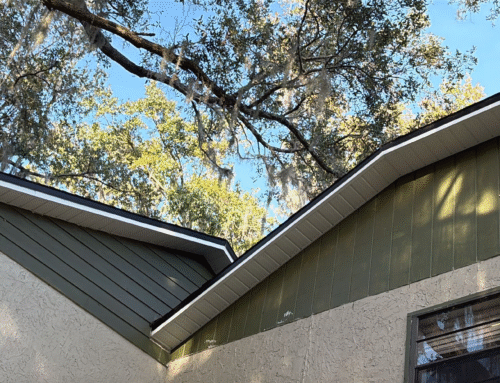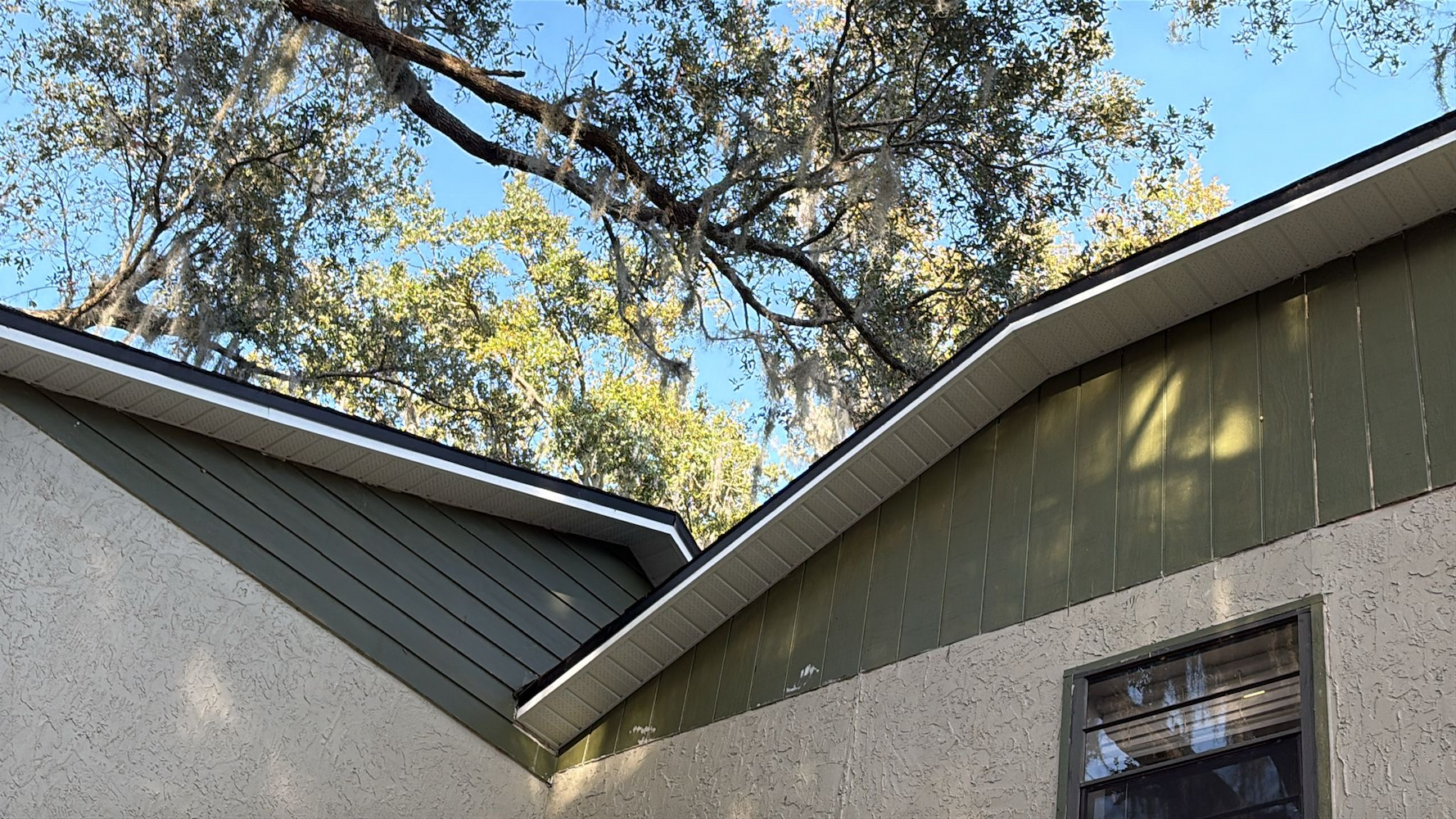

We’ve all heard of gutters, but what about a drip edge on a roof?
Like gutters, drip edges are essential for channeling water away from your home and decreasing the risk of water damage.
Whether you’re a homeowner or a commercial property owner, you must make sure your drip edges are functioning properly.
Still not convinced?
Read on to learn 5 essential reasons why you need a functioning drip edge on your home or building.
What Is a Drip Edge on a Roof?
A drip edge (sometimes called an eavestrough drip edge) is a thin metal strip installed along the edges of your roof.
Its main job is to keep water from seeping underneath shingles, directing it safely into the gutter system.
By preventing moisture from reaching the fascia, soffit, or roof deck, a gutter drip edge helps protect the entire roofing system and extends its lifespan.
Do Drip Edges Go Under Gutters?
Just as their name suggests, drip edges are installed along the edge of your roof.
More specifically, along a rake and an eave. This critical part of your roof must be installed below the underlayment of the eaves where it acts as a barrier (or armor) and keeps water out.
Let’s take a closer look at the different types of drip edges.
Types of Drip Edges
Drip edges come in all shapes and materials. The type you need depends on
a variety of factors such as:
- Roof size
- Local climate
- Roof steepness
- Roof and shingle material
- Your budget
The best way to find the best drip edge for you is to speak with a gutter installation specialist who can quickly determine which type best suits your property.
Generally, drip edges can be identified by either:
1.Their profile
Or
2.Their material
Let’s take a closer look at the most common types.
4 Popular Profiles of a Drip Edge on a Roof
Profiles are determined by their shape and can vary in durability.
The easiest way to determine which profile is which?
Just look at its shape!
- Type C, also known as the “L-shaped” drip edge, forms a precise 90-degree angle and is an economical choice.
- Type D, also known as the “T-profile,” features a T-shaped design that provides additional coverage and protection.
- Type F is designed to withstand harsh rains and high winds, overlapping the fascia and roof deck.
- Type Z is characterized by its Z-shaped profile, providing robust water runoff capabilities and enhanced durability.

If you’re having a hard time understanding the purpose of choosing different profiles, try thinking of your home as a knight
Think of your home as a knight, and your roof and gutter system (drip edges included) as your home’s armor.
To minimize the “chinks” in your home’s armor, you must choose the best-fitting armor possible to prevent swords, or water, from harming your home.
That’s where drip edge profiles come in.
Choosing a poor-fitting profile will deem this useful tool ineffective, allowing water to seep onto your roof’s deck and build up, creating serious structural damage.
Common Materials of a Drip Edge on a Roof
As with profiles, the materials can vary. Let’s take a look at the four most common materials:
Galvanized Steel
This material is known for its strength. If you live in an area that sees high levels of moisture (e.g., harsh snowstorms or rainstorms), then an installer may recommend galvanized steel.
Aluminum
Aluminum is one of the most popular choices–and with good reason! This material is durable, cost-effective, and doesn’t rust.
Copper
A Higher priced option, many homeowners choose copper for its aesthetically pleasing color on their homes’ exterior. Copper is also a durable material, but can change colors over the years as it’s exposed to the elements.
Vinyl
Vinyl, while not made of metal, is one of the most cost-effective options and can come in a variety of colors to match your home or building.

5 Essential Reasons Why You Need a Drip Edge on a Roof
Still on the fence about whether or not you really need new drip edges on a roof?
Check out these 5 critical reasons you need a functioning drip edge that’ll have you dialing your local installer faster than you can say ‘gutters.’
1. Avoid Expensive Repairs
Without a drip edge, you leave your home vulnerable to the elements. Whether you live in the Hurricane-prone South or brave the brutal Midwest winters, the harsh elements cause wear and tear to your property.
If you don’t update your gutter systems, then you’ll be ill-prepared when Mother Nature comes along, increasing your risk of water damage.
Think about it: It’s less expensive to replace your drip edges than it is to replace an entire roof–and that’s not accounting for any internal damage too!
2. Decrease Exposure to Mold & Mildew
Water leads to mold and mildew. And mold and mildew lead to harmful toxins and deterioration.
While your gutter system may be “out-of-sight, out-of-mind” to you, they are also cool, dark places–making this space a perfect breeding ground for toxic mold.
Drip edges can prevent water from entering your roof deck, keeping it dry and free of mold. If you live in Florida, or any other state with high humidity, you’re even more susceptible.
And besides mold, who knows what else your gutters could be harboring?
This leads me to my next point…
3. Keep Pests Out of Your Fascia Boards
Rats, bugs, and other critters love settling down in places away from danger.
We hate to break it to you, but your gutters make the perfect home.
This also means that pests have a way of finding their way under eaves, fascia boards, and basically in any other place you don’t want them.
However, when paired with regular gutter cleaning, drip edges can help ensure rats, bugs, and other unwanted critters stay out of your gutters, eaves, and fascia boards.
4. Decrease Risk of Injury & Damage
Water damage isn’t just unsightly stains on the ceiling–it can cause serious structural damage. Not only does this put you and your family (or tenants) at risk, it can ruin your furniture and other valuables if you don’t catch the damage in time.
With an updated gutter system, you can effectively channel water off your roof and decrease the risk of water damage.
5. Meet Building Codes & Pass Home Inspection
New builds must be up to code and pass rigorous inspections. To ensure everything goes smoothly the next to you sell a property, it’s important that you invest in your building’s gutter system.

How to Ensure Proper Installation & Prevent Water Damage
Drip edges are an essential part of your home’s exterior.
Without them, your roof deck would be susceptible to water damage, costing you more money and stress on repairs in the long run. To ensure that your gutter system’s health is in tip-top shape, reach out to a gutter install expert to get a professional opinion.
Have a drip edge roof? But need new gutters in the Central Florida area?
Give GutterWorks a call at (407) 809-1427 and receive a FREE quote.
We specialize in premium gutter installation and are committed to helping you protect your home from the harsh Florida elements. Our team is standing by to answer your call!
Frequently Asked Questions
What is drip edge on a roof?
Drip edge is the metal flashing tucked under the lower edge of the roofing material that directs water off the roof and into the gutter, away from the fascia. It’s the bridge between the roof and the gutter system that keeps water from wicking back behind the gutter.
Where does drip edge go on a roof?
Drip edge installs along the eaves (lower edge) and along the rakes (sloped sides) of the roof. On the eaves it sits behind the gutter and on top of the fascia, so water drops cleanly into the gutter rather than running back down the fascia.
What’s the difference between drip edge on the eave vs. the rake?
“Drip edge” generally refers to flashing on the eave (the lower, gutter-side edge of the roof). The same or similar flashing on the sloped non-gutter side of the roof is sometimes called rake edge. Both keep water from wicking back behind the fascia or rake board.
Do shingles overlap drip edge, or does drip edge overlap shingles?
On the eave (where the gutters are), the shingles are installed on top of the drip edge so the water rolls off the shingle and onto the drip edge. On the rake side, drip edge is typically installed on top of the underlayment but under the shingles. Proper sequencing is what makes the system shed water correctly.
Should there be a gap between the drip edge and the gutter?
A small gap is normal and intentional — typically a half inch or so — to allow water to drop into the gutter rather than wick back. Too large a gap means water can blow back behind the gutter; too small means water can capillary-lift onto the fascia. Proper installation keeps it in the sweet spot.
Does GutterWorks install drip edge with new gutters?
Yes. Drip edge is a standard part of every GutterWorks gutter installation in Central Florida. We’ve been installing seamless gutter systems for more than 20 years, fully insured up to $5 million. Free quote: (407) 809-1427.