
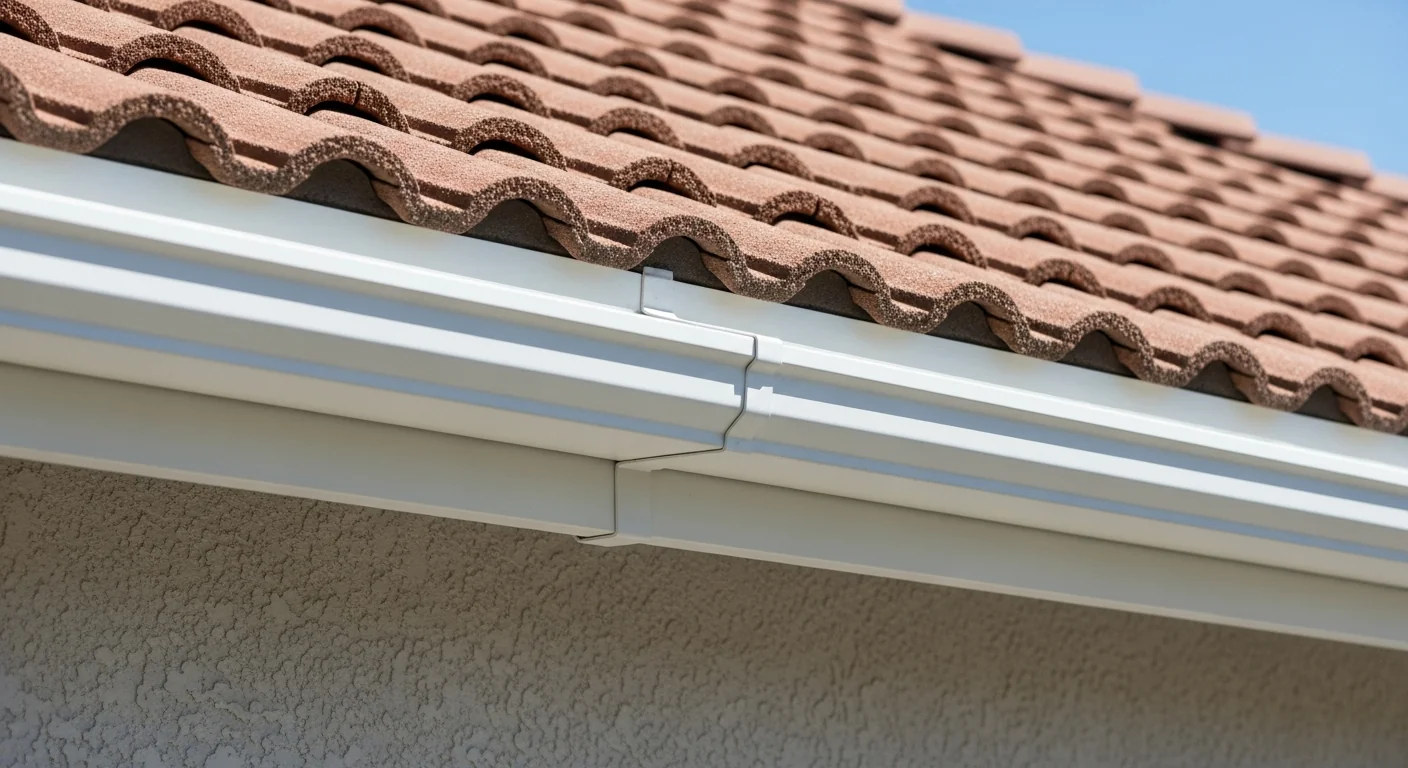
If you’re not a roofing or gutters expert, architectural terms like “fascia” probably aren’t part of your everyday vocabulary. Don’t worry — you’re not alone. Most homeowners don’t think about fascia until something goes wrong. But here’s the thing: fascia is one of the most important parts of your home’s exterior, and ignoring it can lead to thousands of dollars in preventable damage.
Whether you’re buying a home, planning renovations, or just noticed something off along your roofline, we’ve got you covered. Let’s break down exactly what fascia is, where it’s located, what it does, and why Florida homeowners need to pay extra attention to it.
What Is Fascia?
Fascia (pronounced “fay-shuh”) is the long, straight board that runs along the lower edge of your roof. It’s mounted directly to the ends of the roof trusses or rafters, creating a smooth, finished edge between the roof and the outer walls of your home.
Think of fascia as the “frame” around your roofline. It’s the vertical board you see when you look up at the edge of your roof from the ground. In most homes, it’s the board your gutters are attached to.
Where Is Fascia Located on a House?
Fascia runs along the entire perimeter of your roofline, wherever the roof edge overhangs the exterior walls. You’ll find it:
- Along the eaves (the horizontal edges of your roof that overhang the walls)
- Behind your gutter system, where the gutters are physically mounted
- Directly below the drip edge or roof shingles
- Adjacent to the soffit, which covers the underside of the roof overhang
If you step outside and look up at your roofline, the vertical board running along the edge — that’s your fascia. If you have gutters, the fascia is the board directly behind them.
What Does Fascia Do? 5 Critical Functions
Fascia isn’t just decorative trim. It performs several essential functions that protect your home’s structure and appearance.
1. Supports Your Gutter System
Your gutters are mounted directly to the fascia board. Without a solid, intact fascia, your gutters can’t stay securely attached. Damaged or rotting fascia means sagging gutters, improper drainage, and eventually water damage to your foundation, landscaping, and siding.
2. Seals the Roof Edge
Fascia creates a barrier between the edge of your roof and the outside elements. It covers the exposed ends of your roof rafters, preventing rain, wind, and humidity from penetrating the roof structure and reaching the attic or interior walls.
3. Blocks Pests and Wildlife
Gaps in your fascia are an open invitation for squirrels, rats, birds, bats, and insects to enter your attic. In Florida, this is especially important — the warm, humid climate makes attics an attractive nesting spot for wildlife year-round.
4. Prevents Moisture and Rot
By sealing the roof edge, fascia keeps moisture from seeping into the wood framing of your roof. This is critical in Florida, where heavy afternoon rain showers, hurricanes, and high humidity can accelerate wood rot and mold growth faster than in drier climates.
5. Provides a Clean, Finished Appearance
Fascia gives your roofline a polished, professional look. Without it, you’d see exposed rafter tails and rough framing — not exactly the curb appeal most homeowners are going for. Well-maintained fascia contributes directly to your home’s resale value.
Common Fascia Materials
Fascia boards come in several materials, each with trade-offs in durability, cost, and maintenance requirements. Here’s what Florida homeowners typically choose from:
- Wood: The traditional choice. Affordable upfront, but requires regular painting and sealing to resist Florida’s moisture. Pine and cedar are common, with cedar offering better natural rot resistance.
- Aluminum: Lightweight, rust-resistant, and virtually maintenance-free. Aluminum fascia (often called “fascia wrap” or “fascia capping”) is installed over existing wood boards to protect them from the elements. A popular upgrade for Florida homes.
- Vinyl (PVC): Won’t rot, warp, or attract termites. Low maintenance and affordable. However, vinyl can become brittle in extreme heat and may fade with prolonged UV exposure.
- Composite: Engineered from wood fibers and resins. Offers the look of real wood with improved moisture resistance. More expensive than wood or vinyl but lasts significantly longer in humid climates.
- Fiber Cement: Extremely durable and resistant to rot, fire, and termites. Heavier than other options and requires professional installation, but it holds up exceptionally well in Florida’s harsh weather.
For most Florida homeowners, aluminum wrap over wood or fiber cement fascia boards are the top recommendations due to their durability in our hot, humid climate.
Fascia vs. Soffit: What’s the Difference?
Fascia and soffit work together, but they’re not the same thing. Here’s the simple distinction:
- Fascia is the vertical board along the edge of the roof. It faces outward — you see it when you look up at your roofline from the street.
- Soffit is the horizontal panel on the underside of the roof overhang. It faces downward — you see it when you stand directly under the eave and look up.
Both components are critical for protecting your roof structure, managing attic ventilation, and keeping pests out. If you’re unfamiliar with soffit, check out our complete guide: What Is a Soffit? Explanation & Importance.
How Fascia Affects Your Gutter Performance
Because your gutters mount directly to the fascia, the condition of your fascia boards has a direct impact on how well your gutter system works. Here’s the chain reaction when fascia fails:
- Rotting or warped fascia causes gutter brackets to loosen and pull away from the house
- Loose gutters create gaps where water overflows instead of draining properly
- Overflowing water pools around your foundation, causing erosion, flooding, and structural damage
- Standing water near the foundation can lead to costly foundation repairs — one of the most expensive home repairs there is
This is exactly why we recommend regular fascia inspections as part of your gutter maintenance routine. If you’ve noticed your gutters pulling away from the house or water overflowing during storms, damaged fascia could be the root cause. Learn more: How to Tell If You Need Fascia Repair Immediately.
Fascia Maintenance Tips for Florida Homeowners
Florida’s climate is tough on fascia. Here’s how to keep yours in good shape:
- Inspect twice a year: Check your fascia in spring (before hurricane season) and fall. Look for peeling paint, soft spots, discoloration, or visible gaps.
- Keep gutters clean: Clogged gutters cause water to back up against the fascia, accelerating rot. Clean your gutters at least twice a year.
- Repaint or reseal wood fascia every 3–5 years: Florida’s UV exposure and humidity break down paint and sealant faster than in other states.
- Trim overhanging branches: Branches that touch or rub against your fascia can damage the finish and trap moisture.
- Address small problems immediately: A small soft spot today becomes a full board replacement (and potential gutter reattachment) tomorrow. Don’t wait.
When to Call a Professional
If you notice signs of deterioration, don’t wait. Discover what happens when you ignore a rotted fascia board and why acting quickly matters.
Some fascia issues are beyond a quick DIY fix. Call a professional if you notice:
- Soft, spongy, or crumbling fascia boards
- Visible mold, mildew, or dark staining along the roofline
- Gutters pulling away from the house or sagging significantly
- Peeling paint that keeps coming back despite repainting
- Evidence of animal or insect entry along the roofline
- Water stains on your exterior walls below the roofline
At GutterWorks Services, we’ve been helping Central Florida homeowners protect their properties for over 20 years. As a family-owned business, we treat every customer like family — with respect, transparency, and honest recommendations. We’ll inspect your fascia, identify any damage, and walk you through the most cost-effective solution. Plus, we’re fully insured up to $5 million, so you’re in safe hands.
Get Your Free Fascia Inspection Today! Call (407) 960-9489 or request a free estimate online.
We serve Orlando, Oviedo, Winter Park, Windermere, Lake Mary, Lake Nona, Kissimmee, Sanford, Winter Springs, and 25+ communities across Central Florida. Financing options available up to $200,000 with 0% APR.
More from GutterWorks
- 5 Reasons You Need a Drip Edge on Your Roof — how the drip edge works with fascia and gutters to protect your roofline
- Parts of a Gutter System — every component your fascia helps support
- GutterWorks Services — gutter, soffit, fascia, and screen enclosure work across Central Florida
- Seamless Gutters in Orlando — our flagship gutter installation service
- Get a free fascia repair quote — same-day response, fully insured up to $5 million
Frequently Asked Questions
How much does fascia repair cost in Florida?
Fascia repair costs vary depending on the extent of damage, material, and accessibility. Minor repairs typically range from $300–$800, while full fascia replacement for an average Florida home can run $1,500–$4,000+. At GutterWorks, we offer free, no-obligation estimates so you know exactly what to expect before any work begins. We also offer financing up to $200,000 with 0% APR for up to 21 months, so cost doesn’t have to hold you back from protecting your home.
Can I replace fascia myself?
Small sections of wood fascia can be a DIY project if you’re comfortable working on a ladder and have basic carpentry skills. However, if the damage is extensive, involves the soffit or gutters, or requires aluminum or fiber cement installation, professional installation is strongly recommended for safety and warranty reasons.
How long does fascia last?
Wood fascia typically lasts 15–20 years with proper maintenance in Florida’s climate. Aluminum-wrapped fascia can last 20–30+ years. Fiber cement and composite materials often exceed 25 years with minimal upkeep.
Does fascia affect home value?
Absolutely. Damaged or visibly deteriorating fascia is a red flag during home inspections and can reduce your home’s appraised value. Well-maintained fascia signals that the homeowner takes care of the property — a strong selling point in Florida’s competitive real estate market.
What does house fascia look like?
From the ground, fascia looks like a long, flat board running horizontally along the edge of your roof. It’s typically painted to match your home’s trim color. On most homes, you’ll see it as the board directly behind (or above) your gutters. Fascia boards are usually 6 to 8 inches wide and can be made of wood, aluminum, vinyl, or composite material. If your home doesn’t have gutters, the fascia board is the clean, finished edge visible along the roofline.
What is the purpose of fascia on a house exterior?
The purpose of fascia is threefold: structural support, weather protection, and aesthetics. Structurally, it provides the mounting surface for your gutter system. For weather protection, it seals the exposed ends of roof rafters from rain, wind, and pests. Aesthetically, it creates a clean, finished look along your roofline that enhances curb appeal and home value.


