
Table of Contents
- The Anatomy of a Gutter System Explained
- Why You Need Seamless Gutters
- The Dangers of A Clogged Gutter and How to Prevent It
- How to Choose the Best Gutter Type
- How Long Do Gutter Systems Last?
- Dangers of Incorrect Gutter Installation
- How To Find The Right Gutter Installation Partner
- Questions to Ask Before Hiring A Gutter Installer
- What to Expect From the Professional Gutter Installation Process
- Protect Your Home with High-Quality Gutters
The Ultimate Gutter Guide For Protecting Your Home
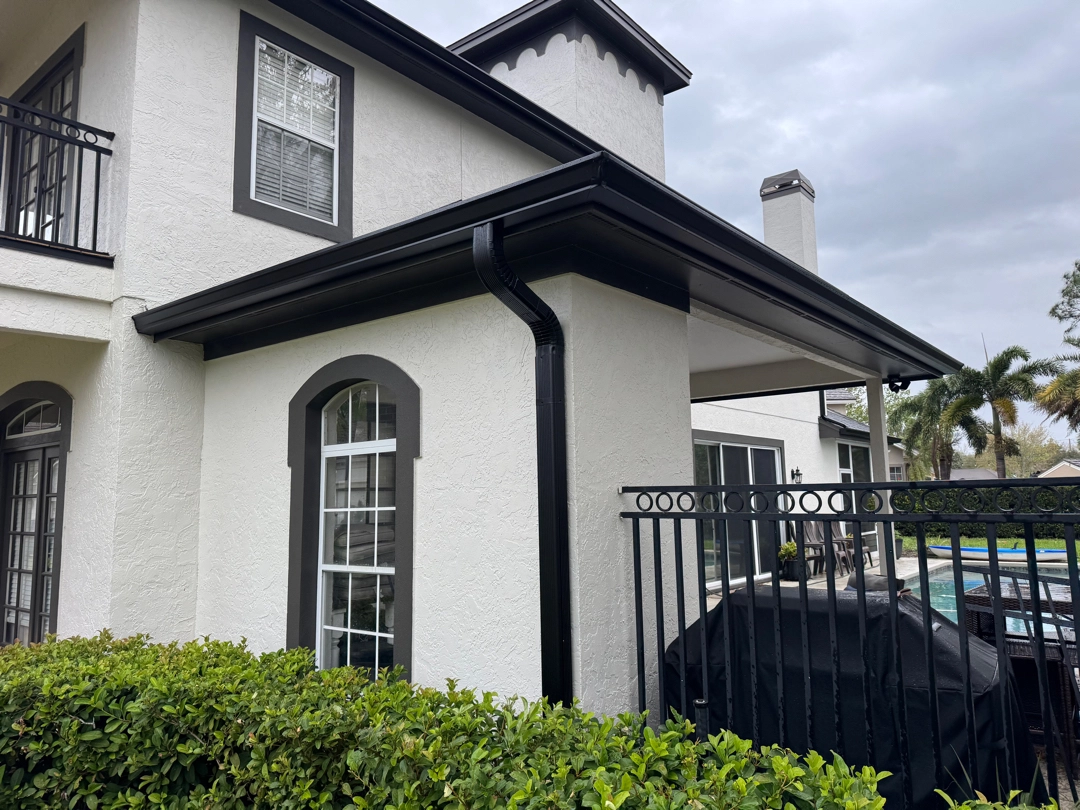
Ever wondered what really happens when rain hits your roof? Here’s a hint: without the right gutter system, that “harmless” rainfall can quickly turn into foundation cracks, mold growth, and costly home repairs.
That’s why we created this ultimate guide to help you understand every part of your gutter system, why it matters, and how to protect your Florida home from the elements. By the end, you’ll know exactly how gutters work, which type suits your home, and what to look for in a professional gutter installation partner.
Let’s dive in.
The Anatomy of a Gutter System Explained
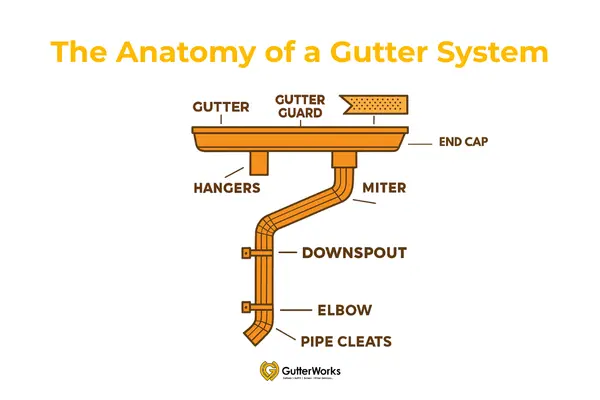
Before you can choose the best gutter system, it helps to know what each part does. Think of gutters as a highway for rainwater; every part has a specific job to keep water flowing safely away from your home.
Florida’s heavy rains and hurricane-prone weather make each component critical for protecting your foundation, roof, and landscaping.
Gutter
The gutter is the main horizontal channel that runs along your roofline. It collects rainwater and directs it toward downspouts.
A properly sized and installed gutter prevents water overflow, protects your home’s foundation, and reduces soil erosion.
Downspout
Downspouts are the vertical pipes that carry water from the gutters down to the ground or into your drainage system.
Placement is key; poorly placed downspouts can cause water to pool around the foundation, leading to cracks or flooding. Position downspouts away from the home’s base and toward drainage areas or swales to handle heavy rainfall efficiently.
End Cap
End caps are sealed plates that close off the ends of your gutters, ensuring water only exits through downspouts. It prevents leaks at the edges and maintains smooth water flow.
Check for cracked or loose end caps, as even small leaks can cause damage over time.
Elbows
Elbows are angled connectors that guide water from the gutter into the downspout, especially around corners or tight spots. They ensure water is directed safely away from your home’s foundation, protecting landscaping and preventing erosion.
For homes in hurricane-prone areas, make sure the elbows are tightly secured to withstand strong winds.
Pipe Cleats
Pipe cleats hold downspouts securely against the house to prevent swaying or detachment during storms. Strong winds from tropical storms or hurricanes can easily tear unsecured downspouts from the roofline, causing costly damage.
Miters
Miters are corner pieces that connect two sections of gutters, allowing water to flow smoothly around corners. They prevent leaks at the junctions of gutters, ensuring seamless water flow.
Properly sealed miters are especially important in areas with heavy rain to avoid overflow and foundation issues.
Hangers
Hangers are brackets that support the gutter along the roofline. Heavy-duty hangers keep gutters from sagging or pulling away during heavy rain.
Florida homes benefit from reinforced hangers due to intense downpours and wind exposure.
Gutter Guards
Gutter guards are protective covers that block leaves, twigs, and debris from entering the gutter system. They reduce the frequency of cleaning, prevent clogs, and improve water flow.
With oak, pine, and palm trees everywhere, gutter guards are almost essential to prevent constant maintenance.
Why You Need Seamless Gutters
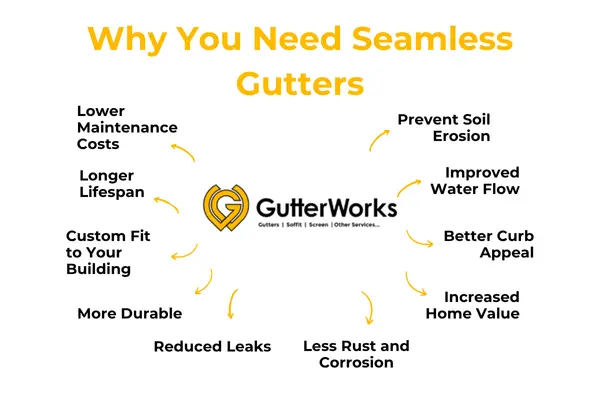
If you’re still relying on traditional sectional gutters, you’re missing out on one of the smartest home upgrades available. Seamless gutters are built from a single continuous piece of metal, customized to fit your home perfectly.
1. Lower Maintenance Costs
Seams are the most common spot for leaks and clogs. Fewer seams mean less water damage and fewer blockages.
That translates to less time cleaning gutters and more money in your pocket over the years.
2. Longer Lifespan
Seamless gutters are made from high-quality materials like aluminum, copper, or stainless steel, designed to withstand Florida’s:
- Intense sun
- Heavy rains
- High humidity
With proper maintenance, they often last decades longer than traditional sectional gutters.
3. Custom Fit to Your Building
Every home is unique, and seamless gutters are cut on-site to match your roofline perfectly. That means no:
- Awkward joints
- Misaligned corners
- Guesswork
The custom fit ensures water flows efficiently without risk of leaks.
4. More Durable than Regular Gutters
The continuous design of seamless gutters makes them structurally stronger. They resist:
- Sagging
- Pulling apart
- Warping
These are all common issues with sectional gutters, especially during Florida storms.
5. Reduced Leaks
Every seam in a traditional gutter system is a potential weak point. Seamless gutters eliminate most leaks by design, keeping your home safer from water intrusion and foundation damage.
6. Less Rust and Corrosion
Fewer joints mean fewer areas where water can get trapped and cause rust. This is especially important in humid Florida climates and coastal areas where salt air can accelerate corrosion.
7. Increased Home Value
Seamless gutters aren’t just functional; they’re a visible sign of quality craftsmanship. Homebuyers notice attention to detail, which can increase resale value and make your home more appealing on the market.
8. Better Curb Appeal
Gone are the unsightly seams and connectors that make older gutters look patched together. Seamless gutters create a clean, polished finish that complements your home’s exterior and improves its overall appearance.
9. Improved Water Flow
Seamless gutters provide a smoother interior surface compared to sectional gutters. This:
- Reduces blockages
- Improves drainage efficiency
- Prevents the buildup of debris
These can lead to larger issues like clogs and overflows.
10. Prevent Soil Erosion
Poorly functioning gutters can dump water directly into your yard, creating gullies and washing away topsoil. Seamless gutters direct water safely away from your foundation and landscaping, keeping your yard intact and beautiful even after heavy Florida downpours.
The Dangers of A Clogged Gutter and How to Prevent It
Clogged gutters might seem like a minor inconvenience, but the reality is far more serious. Ignoring them can lead to costly home repairs, health hazards, and even safety risks.
Let’s break down why keeping your gutters clear is crucial for Florida homeowners.
Why It’s Crucial For Your Home’s Maintenance to Clean Gutters
Neglecting gutter maintenance can create multiple problems that threaten your home:
- Foundation Damage: Water overflowing from blocked gutters can pool around your home’s foundation. Over time, this can lead to cracks, settling, and even structural damage, a nightmare for any homeowner.
- Roof Leaks and Damage: When gutters back up, water can seep under shingles or damage fascia boards, leading to roof leaks and rot. Left unchecked, this can compromise your entire roofing system.
- Pest Infestation: Stagnant water and debris attract mosquitoes, termites, and rodents. Clogged gutters provide the perfect breeding ground for these unwelcome visitors.
- Landscape Erosion: Overflowing gutters can wash away flower beds, mulch, and topsoil, ruining landscaping and creating muddy, uneven areas around your property.
- Mold & Mildew Growth: Standing water encourages mold and mildew growth on exterior walls and in crawlspaces, posing serious health risks for you and your family.
Clearly, clean gutters are more than a cosmetic issue; they’re a critical part of protecting your home’s value and safety.
How to Prevent Clogged Gutters
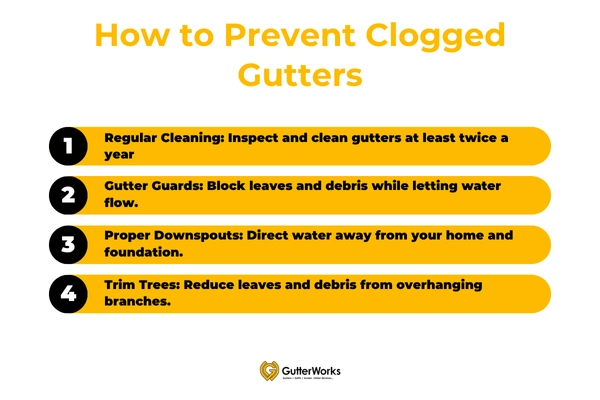
Prevention is always easier than repair. Here are the most effective ways to keep your gutters flowing freely:
- Regular Cleaning Schedule: Inspect and clean your gutters at least twice a year. In Florida, it’s wise to schedule cleanings before and after the rainy season.
- Install Gutter Guards: These covers prevent leaves, twigs, and debris from entering your gutters while still allowing water to flow through. For tree-heavy Florida neighborhoods, they’re a game changer.
- Proper Downspout Placement: Make sure downspouts direct water away from your home and foundation. Correct positioning prevents pooling and soil erosion.
- Trimming Nearby Trees: Overhanging branches drop leaves and debris into gutters. Regularly trimming trees reduces the amount of material that could clog your system.
How Often Should You Clean Your Gutter System?
While most experts recommend cleaning gutters twice a year, several factors may require more frequent attention. Homes surrounded by large trees or in areas with heavy rainfall often benefit from quarterly cleanings.
Factors That Affect Cleaning Frequency:
- Trees: Homes near oak, pine, or palm trees tend to accumulate debris faster, increasing the risk of clogs.
- Weather: Heavy rains, hurricanes, and storms can wash extra debris into gutters, requiring additional inspections.
- Location: Coastal homes or areas with high winds may need more frequent maintenance to keep gutters clear.
Signs It’s Time to Clean Your Gutters
Even if you follow a schedule, it’s important to monitor your gutters for warning signs:
- Overflowing Water During Rain: Water spilling over the edges is a clear indicator of clogs.
- Sagging or Detached Gutters: Excess debris and standing water can add weight, causing gutters to pull away from the roofline.
- Visible Plant Growth Inside Gutters: Small plants sprouting inside gutters are a sure sign that debris has been sitting too long.
- Pests or Birds Nesting in Gutters: Mosquitoes, birds, and rodents take advantage of stagnant water and debris to create nests.
Don’t wait until you see these signs. Proactive maintenance saves thousands in repairs down the road.
How to Choose the Best Gutter Type
A reputable gutter company offers a wide range of options, from styles to colors. Here are a few to consider and their advantages.
Styles
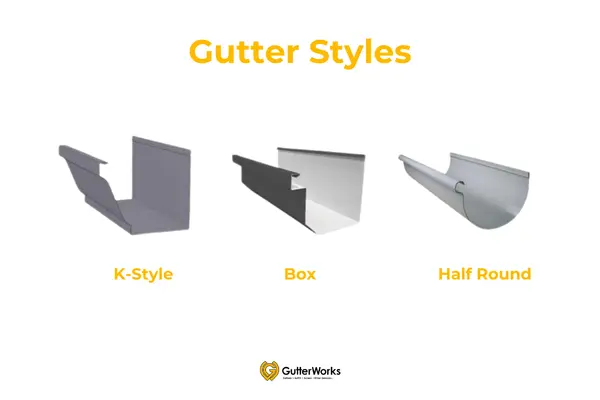
Choosing the right gutter style is about both function and aesthetics. The style you pick affects water flow efficiency, maintenance, and the overall look of your home. Here’s a breakdown of popular options.
K-Style Gutters
K-style gutters are the most common choice for residential homes. They have a flat back and decorative front that resembles crown molding, adding a polished look to your roofline.
Advantages:
- Handles large volumes of water efficiently
- Works well with most home designs
- Compatible with seamless gutter installations
The flat back allows for easy attachment to homes, and the decorative edge enhances curb appeal while managing heavy rainfalls.
Half-Round Gutters
Half-round gutters are classic, semicircular channels that complement traditional or historic homes.
Advantages:
- Smooth interior prevents debris buildup
- Minimal seams reduce the risk of leaks
- Stylish and elegant appearance
While they’re aesthetically pleasing, half-round gutters may handle slightly less water than K-style, so proper sizing is critical in Florida’s heavy storms.
Box Gutters
Box gutters are large, rectangular channels often used for commercial buildings or modern homes with flat roofs.
Advantages;
- High water capacity
- Can be integrated into the roof structure for a clean, low-profile look
- Ideal for homes with flat or shallow-pitch roofs
Box gutters require precise installation to ensure proper drainage, especially in areas with heavy rainfall like Florida.
Super Gutters
Super gutters are specialized gutters typically used around pools and patios.
Advantages:
- Discreetly manage water runoff around outdoor areas
- Prevent pool water contamination or backyard flooding
- Can be combined with underground drainage systems
Florida homeowners with pool areas should consider super gutters to protect landscaping and outdoor living spaces from erosion.
Materials
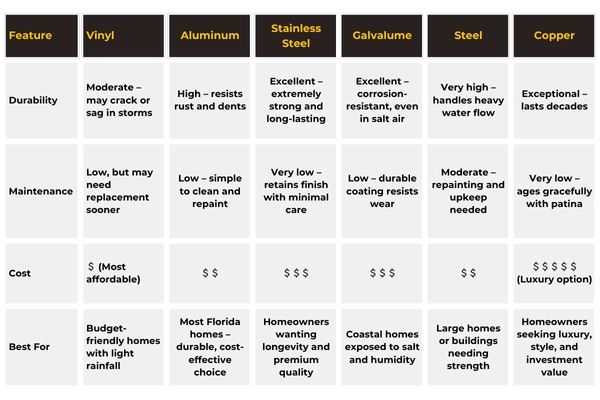
Choosing the right gutter material can feel overwhelming, but it doesn’t have to be. Here’s a detailed breakdown of the most common options so you can make the best choice for your home.
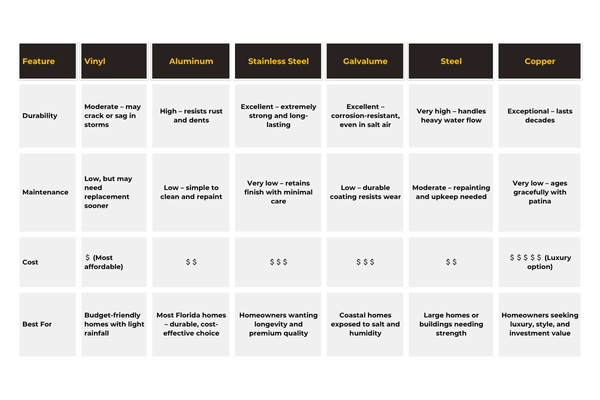
Vinyl Gutters
Vinyl gutters are affordable, lightweight, and easy to install, making them a popular choice for budget-conscious homeowners. They resist rust and corrosion and are available in a variety of colors.
Considerations:
- Vinyl can become brittle under intense sun and extreme heat.
- Heavy storms or strong winds may cause cracking or sagging over time.
- Best for small to medium-sized homes with light to moderate rainfall.
Vinyl is great for cost-effective solutions, but may not offer the longevity or strength needed in storm-prone areas.
Aluminum Gutters
Aluminum is the most widely used material for residential gutters. It’s lightweight, rust-resistant, and works well in seamless configurations. Aluminum gutters can be painted to match your home’s exterior, offering a balance of style and performance.
Advantages:
- Handles humidity and rain without rusting
- Flexible enough to withstand minor impacts without cracking
- Works perfectly for custom, seamless gutter installations
Aluminum gutters offer an excellent combination of durability, affordability, and low maintenance for Florida homes.
Stainless Steel Gutters
Stainless steel gutters are extremely durable and corrosion-resistant, making them an ideal choice for homeowners who want a long-lasting, low-maintenance system. They maintain their appearance over time and can handle extreme weather conditions.
Considerations:
- Higher upfront cost than aluminum or vinyl
- Professional installation is recommended to maximize lifespan and performance
Stainless steel is perfect for homeowners seeking strength, longevity, and a premium finish.
Galvalume Gutters
Galvalume combines a steel core coated with aluminum and zinc, offering exceptional corrosion resistance. This makes it particularly suited for coastal Florida homes exposed to salt air and high humidity.
Advantages:
- Resists rust and corrosion better than traditional steel.
- Can be painted or coated for aesthetic appeal.
- Durable enough for heavy rain and storm conditions.
Galvalume is a great choice for coastal homeowners or anyone seeking a robust, corrosion-resistant gutter system.
Steel Gutters
Steel gutters are strong and sturdy, capable of handling large volumes of water. They’re often used for commercial buildings or large homes where durability is a top priority.
Considerations:
- Susceptible to rust if the paint or protective coating is damaged
- Requires occasional maintenance and repainting to stay in top shape
Ideal for homeowners who prioritize strength and are willing to perform periodic upkeep.
Copper Gutters
Copper gutters are the luxury choice, known for their durability, elegance, and unique aging process. Over time, copper develops a green patina that adds charm and character to any home.
Advantages:
- Extremely long-lasting
- Naturally resistant to corrosion
- Enhances home value and curb appeal
Considerations:
- High upfront cost compared to other materials
- Requires professional installation for best results
Copper gutters are perfect for homeowners seeking a combination of beauty, longevity, and investment value.
How Long Do Gutter Systems Last?
Knowing the lifespan of your gutters helps you plan maintenance, upgrades, and replacements before serious problems occur. The type of material, climate, and care all play a role in how long gutters will perform optimally.
Average Lifespan of Gutters
Different materials have dramatically different lifespans. Here’s a quick guide for Florida homeowners.
Vinyl: 10–20 years
Vinyl gutters are lightweight and cost-effective, but they are more prone to cracking under extreme heat or during heavy storms. Regular inspection is key.
Aluminum: 20–30 years
Aluminum is the most popular choice for residential homes. Rust-resistant and low-maintenance, it handles Florida’s humid climate well, especially in seamless designs.
Copper: 50–100 years
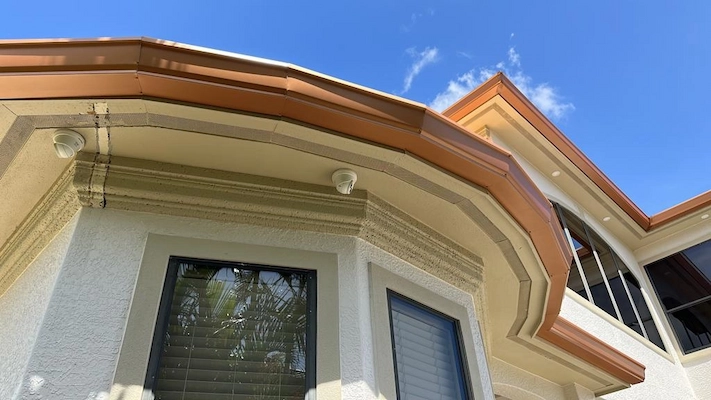
Copper gutters are a luxury option. They resist corrosion and naturally develop a beautiful patina over time, often outlasting the home itself when properly maintained.
Stainless Steel: 50–70 years
Stainless steel offers superior strength and corrosion resistance, ideal for coastal or high-humidity areas. Though more expensive, it provides excellent long-term value.
What Affects How Long My Gutter Lasts?
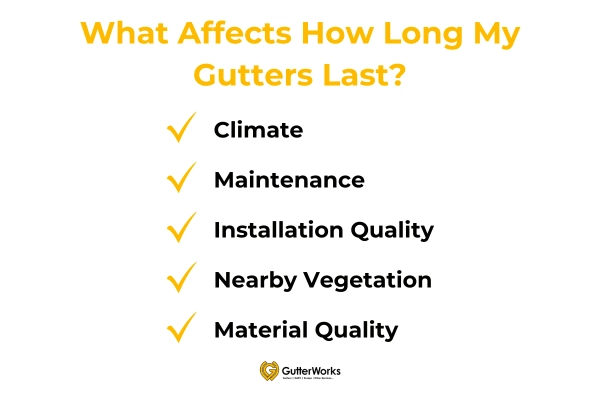
Even the best gutters won’t last forever. Their lifespan depends on a combination of climate, maintenance, installation quality, nearby vegetation, and the materials used. Understanding these factors helps Florida homeowners make smart decisions about installation, upkeep, and replacement.
1. Climate
Florida’s climate is tough on gutters. Intense sun, high humidity, and heavy rainfall can accelerate wear, especially on vinyl and steel gutters. Coastal homes face additional challenges from salt air, which can corrode metal gutters faster than in inland areas.
Homeowners should choose materials that are designed to withstand Florida’s unique weather conditions to maximize longevity.
2. Maintenance
Regular cleaning and inspection are crucial for extending gutter life. Clogs, standing water, and debris buildup can cause rust, sagging, and leaks.
Homes near trees or in areas prone to storms benefit from quarterly maintenance or installing gutter guards, which reduce debris accumulation and prevent premature wear.
3. Installation Quality
Even high-quality materials fail if gutters are installed incorrectly. Poor slope, insecure hangers, or misaligned downspouts can lead to water pooling, sagging, and leaks, shortening the life of the entire system.
Professional gutter installation ensures your system is properly aligned, sloped, and secured, protecting your home and extending the gutter lifespan.
4. Nearby Vegetation
Overhanging trees are more than just a nuisance; they deposit leaves, twigs, and pine needles into your gutters, increasing the risk of clogs and water overflow. This constant debris can also scratch, dent, or warp gutters over time.
Regular tree trimming and preventive measures like gutter guards can significantly reduce this risk.
5. Material Quality
Not all gutters are created equal. Thicker, high-grade metals or premium vinyl last longer and resist cracking, rust, and corrosion. Cheaper, thin metals or low-quality vinyl may degrade quickly under Florida’s sun, storms, and humidity.
Investing in high-quality materials upfront pays off in reduced maintenance and longer-lasting protection for your home.
Signs It’s Time to Replace Your Gutter System
Even the best-maintained gutters eventually reach the end of their lifespan. Replacing them at the right time prevents costly water damage, foundation issues, and structural problems.
Florida homeowners should be especially vigilant because heavy rains, humidity, and storms can accelerate gutter wear. Here are the key warning signs that it’s time to replace your gutters.
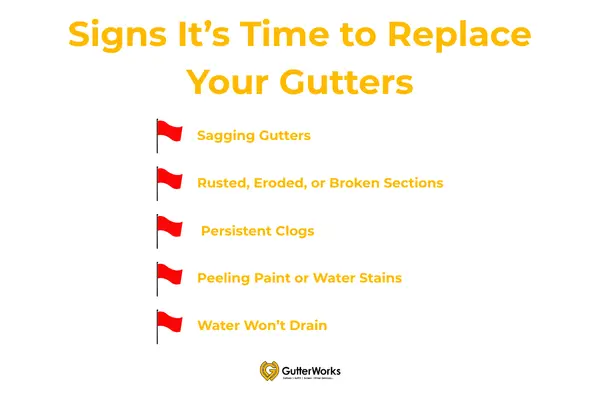
1. Sagging Gutters
If your gutters are pulling away from the roofline or visibly sagging, they can no longer support water flow. This not only increases the risk of collapsing gutters but can also lead to water spilling directly onto your home’s foundation or landscaping. Sagging is often caused by worn-out hangers, excessive weight from debris, or long-term exposure to Florida storms.
2. Rusted, Eroded, or Broken Sections
Visible rust, cracks, or holes are a clear sign of structural compromise. These weak points can lead to leaks, foundation damage, and even gutter collapse during heavy rain or hurricane conditions. Even small sections of damage can compromise the entire system, making replacement the safest option.
3. Persistent Clogs
If your gutters frequently clog despite regular cleaning, it may be due to an ineffective slope, poor design, or worn-out sections. Replacing old gutters with a seamless system can eliminate recurring clogs, improve water flow, and reduce maintenance time and costs.
4. Peeling Paint or Water Stains
Water spilling over the edges can damage siding, fascia boards, and exterior paint, leaving noticeable stains or peeling. These signs indicate your gutters are failing to channel water away properly, which can eventually lead to rot, mold growth, and wood damage.
5. Water Won’t Drain
Standing water inside gutters or pooling around downspouts signals that water isn’t being directed safely away from your home. Improper drainage puts your foundation, landscaping, and crawl spaces at risk and can lead to erosion, flooding, and costly structural repairs.
Dangers of Incorrect Gutter Installation
Improper gutter installation is one of the top causes of home water damage, especially in Florida’s storm-heavy climate. Here’s a closer look at what can go wrong when gutters aren’t installed properly.
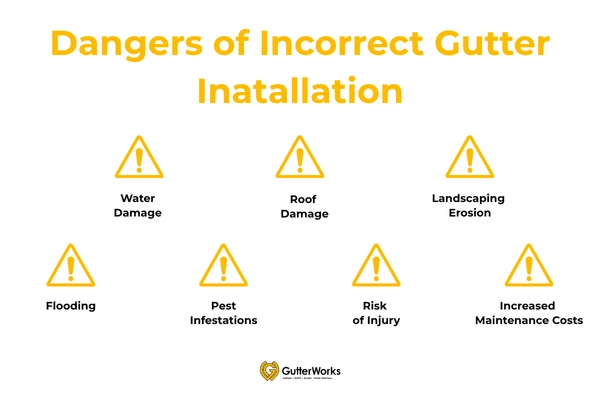
1. Water Damage to the Foundation
Gutters that aren’t sloped correctly or downspouts that don’t direct water away from your home can allow rainwater to pool near the foundation. Over time, this can cause cracks, settling, and even flooding in the foundation or crawl spaces.
Foundation repairs are expensive, and they often stem from preventable gutter issues.
2. Roof Damage
Poorly aligned or sagging gutters can trap water along the roofline. When water sits under shingles or along fascia boards, it can lead to rot, leaks, and structural damage.
Even small leaks can escalate into major repairs if left unchecked, compromising the integrity of your roof.
3. Landscaping Erosion
Misplaced downspouts or uneven gutters can dump water directly onto flowerbeds, lawns, and landscaping. This results in soil erosion, damaged plants, and unsightly gullies, undermining your yard’s aesthetic and functional appeal.
Over time, the cost to repair landscaping damage adds up quickly.
4. Flooding
When gutters fail to direct water away from your home, it can seep into crawl spaces and even first floors. Flooding not only damages flooring, drywall, and personal belongings, but it also increases the risk of mold and mildew, creating health hazards for your family.
5. Pest Infestations
Standing water caused by clogged or poorly installed gutters attracts mosquitoes, termites, and rodents. Birds and insects may also build nests in sagging sections, creating additional maintenance headaches and potential property damage.
6. Risk of Injury
Improperly secured gutters are a safety hazard, especially during storms or high winds. Gutters can detach from the roofline, posing a serious risk to family members, pets, or neighbors nearby.
Proper installation ensures gutters stay firmly in place, even during Florida’s strongest storms.
7. Increased Maintenance Costs
Incorrect installation often leads to repeated repairs, frequent cleaning, and premature replacement. Investing in professional gutter services upfront, such as seamless gutter installation, correct slope, and secure hangers, saves time, money, and stress in the long run.
How To Find The Right Gutter Installation Partner
Your gutters are only as good as the team that installs them. A poorly installed system can lead to leaks, foundation damage, and costly repairs, even if you’ve chosen top-quality materials. Choosing a qualified, experienced professional ensures long-term performance, durability, and peace of mind.
Here’s how to find the right gutter installation partner for your Florida home.
1. Verify License and Insurance
Before hiring any gutter contractor, confirm they are fully licensed and insured in Florida. This protects you from liability in case of accidents or property damage during installation.
- Licensing shows the company meets state standards.
- Insurance ensures you’re not responsible for medical bills or repairs if something goes wrong.
- Ask for copies of both before signing any contract.
A licensed and insured installer is not just a legal requirement; it’s your first line of protection against shoddy work.
2. Request Written Estimates
A reputable company will provide detailed written estimates that clearly outline:
- The materials they plan to use (aluminum, copper, vinyl, etc.)
- Labor costs
- Any additional fees
- Warranties included
Avoid vague or verbal estimates; they often lead to hidden costs or disagreements later. Written quotes give you clarity and confidence that you’re getting fair, transparent pricing.
3. Look at Reviews and Testimonials
Check online reviews on Google, Yelp, or local directories. Pay attention to:
- Homeowners’ experiences with installation quality
- Customer service responsiveness
- How the company handled issues or warranty claims
Local reviews are especially valuable for Florida homeowners. They provide insight into how the installer handles the state’s unique weather challenges, including heavy rains, high humidity, and hurricanes.
Ask the company for references from recent projects. Speaking with previous clients gives you a real-world understanding of their work quality.
4. Ask About Warranties
A company that stands behind its work will offer warranties on both materials and installation. This ensures that:
- If a gutter fails due to poor workmanship, it will be repaired or replaced at no cost.
- High-quality materials like aluminum or copper are covered against defects.
Warranties reflect confidence in their work and offer you peace of mind that your home is protected long-term.
Questions to Ask Before Hiring A Gutter Installer
Hiring the right gutter installer is about more than finding someone with the lowest price. A company that answers confidently, transparently, and professionally is far more likely to provide a durable, long-lasting installation.
Asking the right questions upfront ensures you make an informed decision and protects your home from costly mistakes. Here are the essential questions every homeowner should ask.

1. How long have you been in business?
Experience matters, especially in Florida, where heavy rains, hurricanes, and high humidity can put gutters to the test. An installer with years of experience is more likely to:
- Understand local weather challenges
- Anticipate common installation pitfalls
- Deliver a system that lasts for decades
Look for companies with a proven track record and local references.
2. Do you specialize in seamless gutter installation?
Seamless gutters are the gold standard for long-lasting performance. Unlike sectional gutters, they reduce leaks, clogs, and maintenance needs. Ensure the company you hire:
- Has specialized equipment for on-site seamless gutter cutting
- Understands how to properly measure and fit your home’s roofline
- Can recommend the best materials for your budget and climate
3. What materials do you recommend for my area?
Florida’s weather can impact how different gutter materials perform over time. Ask the installer:
- Which materials handle humidity, heavy rains, and salt air best
- Whether they offer aluminum, copper, stainless steel, or Galvalume options
- The expected lifespan of each material in your region
A knowledgeable installer will help you choose a material that balances durability, cost, and aesthetic appeal.
4. How do you ensure proper slope and drainage?
Incorrect slope or poorly placed downspouts are common causes of water damage. Ask your installer:
- How do they calculate gutter pitch for optimal water flow
- How do they determine the number and placement of downspouts
- What steps do they take to prevent foundation flooding, roof leaks, and landscaping erosion
This ensures your gutters direct water safely away from your home, protecting both the structure and your yard.
5. Can I see samples or previous work?
A reputable company should be proud to showcase its work. Request:
- Photos of completed projects, particularly seamless gutter installations
- References from local Florida homeowners
- Testimonials or case studies demonstrating quality, professionalism, and long-term results
Seeing previous work gives you confidence that the installer can deliver a clean, functional, and aesthetically pleasing system.
What to Expect From the Professional Gutter Installation Process
Installing gutters is a precision job best handled by professionals. A typical installation includes:
- Inspection & Measurement: Professionals assess your roof’s layout, slope, and drainage needs to design the most effective gutter system.
- Choosing Material & Style: Select from materials like aluminum, copper, or vinyl, and styles such as K-style, half-round, box, or super gutters, often with color options to match your home.
- Custom Fabrication: Seamless gutters are cut on-site for a perfect fit, reducing leaks and improving performance.
- Installation of Hangers & Downspouts: Gutters are mounted securely with hangers, and downspouts may include extensions or splash blocks to protect your foundation.
- Final Inspection & Cleanup: The system is checked for proper alignment, sealing, and drainage, and the work area is cleaned, leaving your home ready for rain.
Professional installation ensures durability, proper water flow, and long-term protection for your Florida home.
Protect Your Home with High-Quality Gutters
Your gutters do more than just catch rain; they’re your home’s first defense against water damage, erosion, and costly repairs. From understanding the anatomy of a gutter system to learning the value of seamless designs, you now know what it takes to keep your home safe and beautiful year-round.
But here’s the truth: even the best materials mean nothing without proper installation and maintenance.
Ready to stop worrying about leaks, clogs, and storm damage? Contact GutterWorks today, your trusted gutter installation experts in Orlando and across Florida.
Our team provides professional, seamless gutter services designed to last through Florida’s toughest weather. Schedule your free estimate now and see why homeowners across the state choose GutterWorks for quality, durability, and peace of mind.