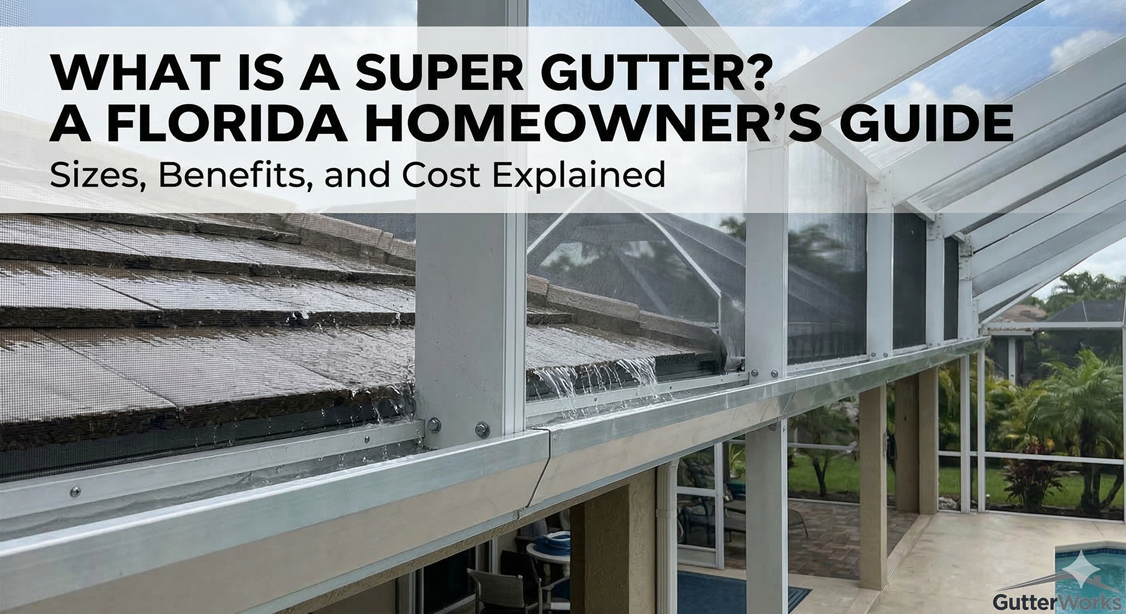
If you have a pool cage or screen enclosure in Florida, you have a super gutter—even if you didn’t know it by that name. It’s the wide aluminum channel running along the roofline where your screen enclosure meets the house. And if it’s failing, you already know the symptoms: water sheeting over the edges during a summer storm, puddles spreading across the pool deck, fascia boards going soft with rot behind the gutter line.
A super gutter is a heavy-gauge, extruded aluminum gutter system that serves two purposes at once. It manages rainwater—channeling it off your roof and away from your patio—and it acts as the primary structural support beam for your entire screen enclosure frame. That second job is what separates it from every other gutter on your house. If your super gutter fails, the pool cage it holds up is compromised too.
At GutterWorks, we’re the only Orlando gutter company that specializes in both screen and gutter installation. We’ve replaced hundreds of super gutter systems across Central Florida—from aging 5-inch troughs in Winter Park to full 7-inch upgrades on sprawling Kissimmee pool enclosures. This guide covers everything you need to know: sizes, costs, replacement signs, and what the installation process actually looks like.
What Is a Super Gutter?
A super gutter is a heavy-gauge, extruded aluminum gutter system designed specifically for Florida pool enclosures and screen enclosures. Unlike standard rain gutters, super gutters serve a dual purpose: they channel rainwater away from your patio and pool deck while simultaneously acting as the primary structural support beam for your screen enclosure frame.
That dual role is what makes them “super.” A standard K-style residential gutter handles water. Period. A super gutter handles water and holds up a structure that can span 40 feet or more.
Here’s what sets them apart physically. Super gutters are four to five times thicker than standard gutters—wall thickness runs 0.040 to 0.050 inches compared to the 0.027-inch gauge you’ll find on a typical K-style gutter. They’re roughly 20 times stronger. The profile is rectangular (box-shaped) rather than the curved K-style you see on most homes. They come in 5-inch and 7-inch widths and can be fabricated in seamless lengths up to 40 feet, which means fewer joints and fewer potential leak points.
Where are they installed? Along the roofline where a screen enclosure or pool cage connects to the house. The enclosure frame bolts directly into the super gutter, which bolts into the fascia board, which is fastened to the roof structure. Every link in that chain matters. A corroded super gutter doesn’t just leak—it weakens the entire enclosure.
Super Gutter vs Standard Gutter: Key Differences
The easiest way to understand a super gutter is to compare it side by side with the standard gutters on the rest of your house. The differences aren’t subtle.
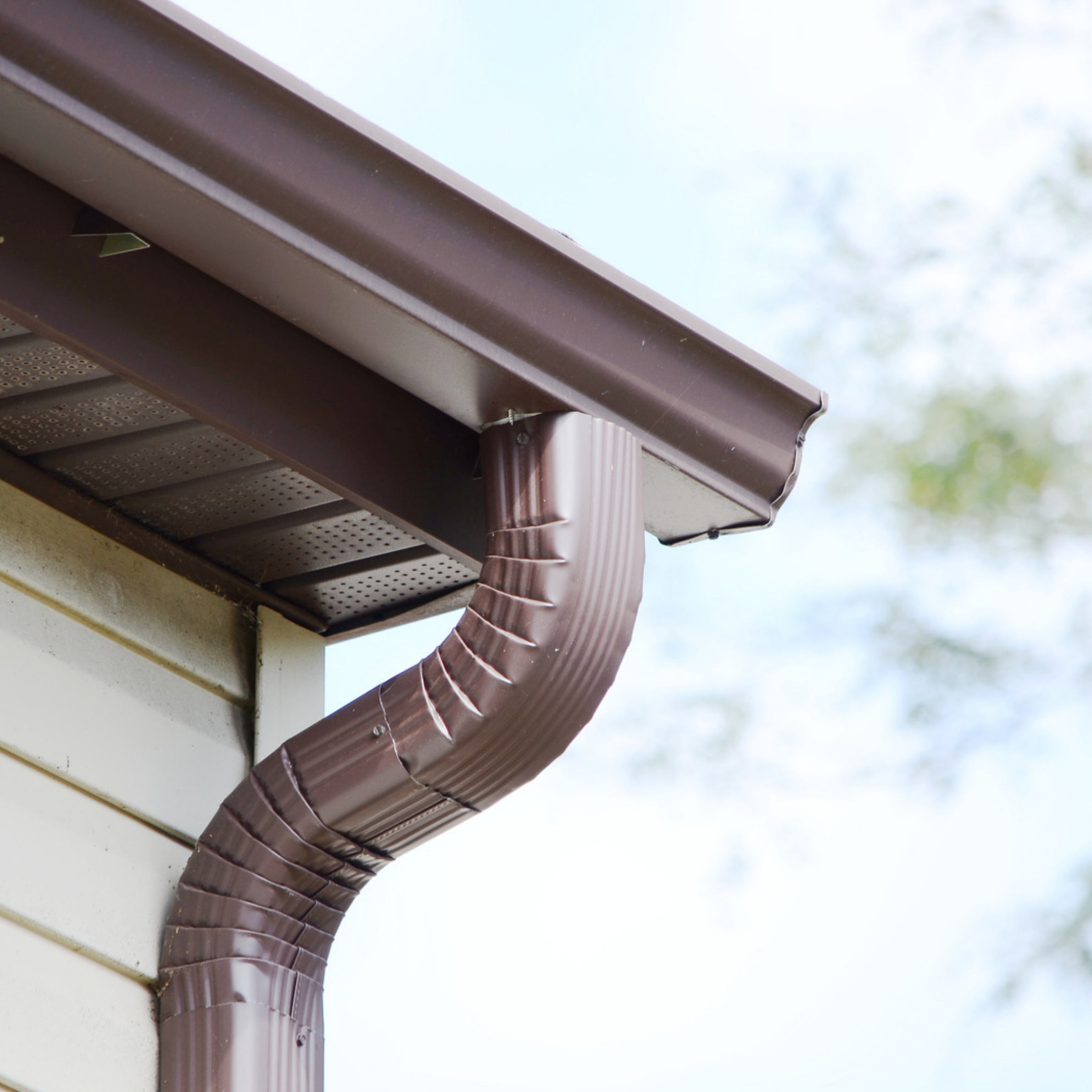
Standard residential gutters are designed to do one thing: move rainwater from your roof to your downspouts. They’re made from thin aluminum, they’re lightweight, and they’re attached with simple hangers. They work fine for that single job.
Super gutters are engineered to do two things. They manage water volume that would overwhelm a standard gutter, and they carry structural load—the weight and wind resistance of your entire screen enclosure. The materials, the thickness, the mounting hardware, and the installation requirements are all different.
| Feature | Standard Gutter | Super Gutter (5″) | Super Gutter (7″) |
|---|---|---|---|
| Material | Standard aluminum | Heavy-gauge extruded aluminum | Heavy-gauge extruded aluminum |
| Profile | K-style or half-round | Rectangular (box) | Rectangular (box) |
| Wall Thickness | 0.027″ | 0.040–0.050″ | 0.040–0.050″ |
| Primary Purpose | Rainwater management | Water + structural support | Water + structural support |
| Structural Load | None | Supports enclosure frame | Supports enclosure frame |
| Wind Rating | Varies | 140 MPH (FL code) | 140 MPH (FL code) |
| Cost / Linear Ft | $6–10 | $15–25 | $20–30 |
| Max Seamless Length | 20–30 ft typical | Up to 40 ft | Up to 40 ft |
| Best For | Standard rooflines | Small–medium enclosures | Large enclosures, high-volume roofs |
| Colors | Multiple | White, Bronze | White, Bronze |
The most important takeaway is this: you cannot substitute a standard gutter for a super gutter on a pool enclosure. They are fundamentally different products built for fundamentally different jobs.
Standard seamless gutters are available in white and bronze and run $6 to $10 per linear foot. Super gutters come in the same color options but cost $15 to $30 per foot because of the heavier material and structural engineering requirements. If you need standard seamless gutter installation for the non-enclosure portions of your home, that’s a separate service—and one we handle as well.
Super Gutter Sizes Explained: 5-Inch vs 7-Inch
Super gutters come in two standard residential sizes: 5-inch and 7-inch. The difference between them is bigger than two inches.
5-Inch Super Gutters are the older, smaller profile. You’ll find them on many Florida homes built before the mid-2000s, especially on smaller screen enclosures, covered patios, and Florida rooms. They handle moderate rainfall and work adequately on enclosures where the roof area draining into the gutter is relatively small. They’re also less expensive. But they have limits. During a heavy summer thunderstorm, a 5-inch trough can reach capacity quickly—and when it overflows, the water has nowhere to go but onto your pool deck and against your foundation.
7-Inch Super Gutters are the modern standard. They handle nearly double the water volume of the 5-inch version. For new installations and most replacements, 7-inch is what we recommend and what most homeowners choose. They’re required for larger pool enclosures, homes with steep roof pitches that accelerate water flow, and properties with heavy tree coverage that drops debris into the trough. If your pool enclosure is wider than 20 feet, 7-inch should be your starting point.
8-Inch and larger options exist for commercial properties and exceptionally large residential enclosures, though these are less common.
Not sure which size you need? The calculation depends on the square footage of roof draining into the gutter, your roof pitch, and local rainfall intensity. A professional assessment takes the guesswork out of it—and at GutterWorks, that assessment is free.
Why Florida Homes Need Super Gutters
Super gutters exist almost exclusively in Florida and the Southeast. There’s a reason for that.
Florida gets punished by rain. Not just a lot of it—over 50 inches annually—but the way it arrives. Summer thunderstorms can dump two to four inches in a single hour. A standard 5-inch residential gutter handling that kind of volume from a large roof area will overflow in minutes. Super gutters, particularly 7-inch systems, are sized to handle those peak flows without spilling over onto your pool deck.
Almost every Florida pool has an enclosure. The state has more screened pool enclosures per capita than anywhere else in the country. These structures need a gutter system that doubles as a structural beam—and that’s exactly what a super gutter is. Without it, there’s no way to attach the enclosure frame to the house while also managing roof runoff.
Florida Building Code doesn’t mess around. Super gutters installed on screen enclosures must be engineered to withstand 140 MPH winds. That’s not a suggestion—it’s code. The heavy-gauge extruded aluminum, the bracket system, and the fascia attachment method are all designed to meet that standard. An undersized or corroded super gutter isn’t just a water management problem; it’s a structural code compliance issue.
Salt air accelerates corrosion. Even homes 20 to 30 miles inland from the coast experience salt-laden humidity. Standard aluminum corrodes faster under these conditions. The thicker gauge of a super gutter resists pitting and corrosion longer, but it’s not immune. Coastal and near-coastal homes should plan on more frequent inspections.
Hurricanes target pool enclosures. Super gutters are among the most commonly damaged components during tropical storms and hurricanes. Wind-driven rain overwhelms drainage, flying debris dents or displaces sections, and the structural stress on the enclosure frame puts enormous strain on gutter joints. Understanding your super gutter system helps you make faster, smarter decisions when storm damage occurs—and knowing what you’re dealing with makes the insurance claim process smoother.
Benefits of Upgrading to a 7-Inch Super Gutter System
If your home currently has a 5-inch super gutter and you’re experiencing overflow, deck flooding, or structural wobble in your enclosure frame, upgrading to 7-inch may solve multiple problems at once. Here’s what the upgrade delivers:
Nearly double the water capacity. The 7-inch trough handles significantly more volume per minute than the 5-inch. During the worst of Florida’s summer storms, that extra capacity is the difference between controlled drainage and a waterfall onto your pool deck.
Better protection for your foundation and pavers. When gutters overflow, that water hits the ground right at your foundation line. Over time, it erodes soil, shifts pavers, and can crack the slab. A properly sized super gutter keeps that water in the channel and routes it to downspouts where it belongs.
Stronger structural support for the enclosure frame. A thicker, wider gutter provides a more stable mounting surface for the screen enclosure. You’ll notice less frame deflection during high winds and less overall movement in the structure.
Reduced clogging and maintenance. A wider trough is harder to block. Small debris that would bridge a 5-inch opening passes through a 7-inch trough without creating a dam. You’ll still want annual inspections, but the day-to-day clogging drops significantly.
Longer lifespan. Thicker aluminum resists corrosion and mechanical wear better. A quality 7-inch super gutter installed on sound fascia will last 25 to 30 years in Florida’s climate.
Fewer seams, fewer leaks. Super gutters can be fabricated in seamless lengths up to 40 feet. Fewer joints mean fewer potential failure points—which means fewer repairs over the life of the system.
Real value in Florida real estate. A modern, well-functioning pool enclosure with a properly sized gutter system is a genuine selling point. Buyers notice sagging screens and rusty gutters. They also notice when everything looks solid and well-maintained.
How Much Does Super Gutter Installation Cost?
Most super gutter companies dance around pricing. We’d rather be direct.
New installation or full replacement runs $15 to $30 per linear foot. That includes materials, labor, and fascia reinforcement. The range depends on the gutter size (5-inch vs. 7-inch), the complexity of your enclosure’s layout, and the condition of your existing fascia.
Here’s what’s typically included in that per-foot price: removal and disposal of the old system, inspection and repair or replacement of the fascia board with pressure-treated wood or composite material, custom fabrication of the new super gutter to your exact measurements, installation with heavy-duty brackets and industrial-grade sealant at all joints, integration of appropriately sized downspouts (3×4-inch downspouts are standard for 7-inch super gutters), and screen re-attachment if panels were disturbed during the work.
For a typical Orlando-area pool enclosure with 60 to 100 linear feet of super gutter, expect a total project cost between $1,200 and $3,000. Smaller patios come in lower; large or complex enclosures run higher.
Factors that push the cost up: multi-story homes with difficult access, enclosures with many corners and angles (each corner requires custom miter work), severely rotted fascia that needs full replacement, and situations where the screen enclosure frame itself needs repair before new gutters can be attached.
How does that compare to standard gutters? Standard 5-inch seamless gutters cost $6 to $10 per foot, and 6-inch oversized gutters run $8 to $14 per foot. Super gutters cost more because they’re made from heavier material and serve a structural purpose that standard gutters don’t.
A note on storm damage and insurance. If your super gutter was damaged by a hurricane or named storm, the replacement may be covered by your homeowner’s insurance. Document the damage with photos before any temporary repairs, and request an assessment from your insurer. An improperly installed replacement can void your screen enclosure warranty—so make sure the contractor you hire is licensed and familiar with Florida Building Code requirements.
Get an exact quote for your super gutter project—free in-home estimates, no obligation.
Signs You Need Super Gutter Replacement
Super gutters don’t fail overnight. They deteriorate slowly, and the warning signs are easy to miss if you’re not looking. Here’s what to watch for:
- Water leaking behind the fascia board where the gutter meets the house—this is often the first sign of joint failure or corrosion
- Visible rust, white oxidation, or pitting on the gutter surface, especially at seams and end caps
- Standing water or debris buildup at gutter joints that should be draining freely
- The gutter pulling away from the house or sagging in sections—this means the fascia behind it may be rotting
- Water overflowing during moderate rain, not just heavy storms—a sign the trough is undersized or partially blocked
- Your screen enclosure frame feels wobbly or unstable when you push on it—the gutter is the structural anchor, and instability suggests it’s compromised
- Dark staining or algae streaks on the pool deck directly below the gutter line
- Your super gutter is more than 20 years old—even quality aluminum degrades over time in Florida’s climate
- Storm damage: dents, bends, or displaced sections after a hurricane or severe thunderstorm
If you’re seeing two or more of these, it’s time for a professional assessment. Catching a failing super gutter early usually means a straightforward replacement. Waiting until the fascia rots or the enclosure frame shifts turns a gutter job into a much larger repair.
The Super Gutter Replacement Process: What to Expect
Replacing a super gutter isn’t a weekend DIY project. It’s structural work that affects your roof connection, your fascia, and your screen enclosure. Here’s what the process looks like when done right:
Step 1: Professional Assessment. A technician measures the existing system, inspects the fascia condition behind the gutter, evaluates how roof drainage patterns affect flow, and determines the correct gutter size—5-inch, 7-inch, or 8-inch. This step also identifies whether your fascia needs repair or full replacement before new gutters go on.
Step 2: Removal of the Existing System. The old super gutter is carefully removed while protecting the screen enclosure frame, roof panels, and soffit. If screen panels are attached to the gutter, they’re detached and set aside for re-installation.
Step 3: Fascia Repair or Reinforcement. This step is critical and it’s where shortcuts cause problems. The super gutter bolts directly to the fascia, and the fascia bears the combined weight of the gutter, the water inside it, and the screen enclosure frame. Rotted or weakened fascia means a failed installation. We replace damaged fascia with pressure-treated wood or composite material rated for Florida’s humidity.
Step 4: Custom Fabrication and Installation. Super gutters are fabricated to your exact measurements—typically off-site for precision, then transported and installed with heavy-duty brackets. All joints are sealed with industrial-grade, UV-resistant sealant. This is where seamless lengths up to 40 feet make a real difference: fewer joints mean fewer future leak points.
Step 5: Downspout Integration. Properly sized downspouts—typically 3×4-inch rectangular for 7-inch super gutters—are installed and connected. Splash blocks or extensions direct water away from the foundation and pool deck.
Step 6: Screen Re-attachment. If screen panels were detached, they’re re-secured to the new gutter system. GutterWorks handles both the gutter and screen work in-house—you don’t need to hire a second contractor.
Timeline: Most residential super gutter replacements take one to two days. Complex or multi-section enclosures may take a third day.
Is a Super Gutter Right for Your Home?
Not sure whether you need a super gutter? Here’s a quick breakdown:
You need a super gutter if you have a pool cage or screen enclosure—it’s almost certainly already there as part of the structure. You also need one if you’re building a new screen enclosure, or if your current enclosure gutter is failing.
You should upgrade to 7-inch if your pool deck floods during heavy rain (your current trough is undersized), your enclosure is wider than 20 feet, your roof has a steep pitch or multiple valleys that concentrate water flow, or you’re in one of Central Florida’s higher-rainfall zones.
You probably don’t need a super gutter if your home doesn’t have a screen enclosure or pool cage. For standard rooflines, seamless gutters are the right solution—and they cost significantly less.
If you’re not sure which category you fall into, a quick on-site assessment clears it up. We’ll measure your enclosure, check your current gutter size and condition, and tell you straight whether you need a replacement, an upgrade, or nothing at all.
Frequently Asked Questions About Super Gutters
Orlando’s Super Gutter Experts
GutterWorks is Orlando’s trusted super gutter specialist. We’re the only local company that handles both gutter and screen enclosure work in-house—which means one crew, one timeline, and one company accountable for the finished result.
We’re fully licensed, insured, and experienced with both 5-inch and 7-inch systems. We know Florida Building Code requirements inside and out, and every installation starts with a free on-site assessment that includes measurement, fascia inspection, and a sizing recommendation tailored to your enclosure.
Whether you need a full super gutter replacement, an upgrade from 5-inch to 7-inch, or just want someone to take a look and tell you where things stand—we’re here.
Get Your Free Super Gutter Estimate or call us at (407) 960-9489.
We serve Orlando, Winter Park, Oviedo, Lake Nona, Kissimmee, Lake Mary, and communities across Central Florida.
Want to learn more about how your gutter system components work together or whether gutter guards are right for your home? We’ve got guides for that too.