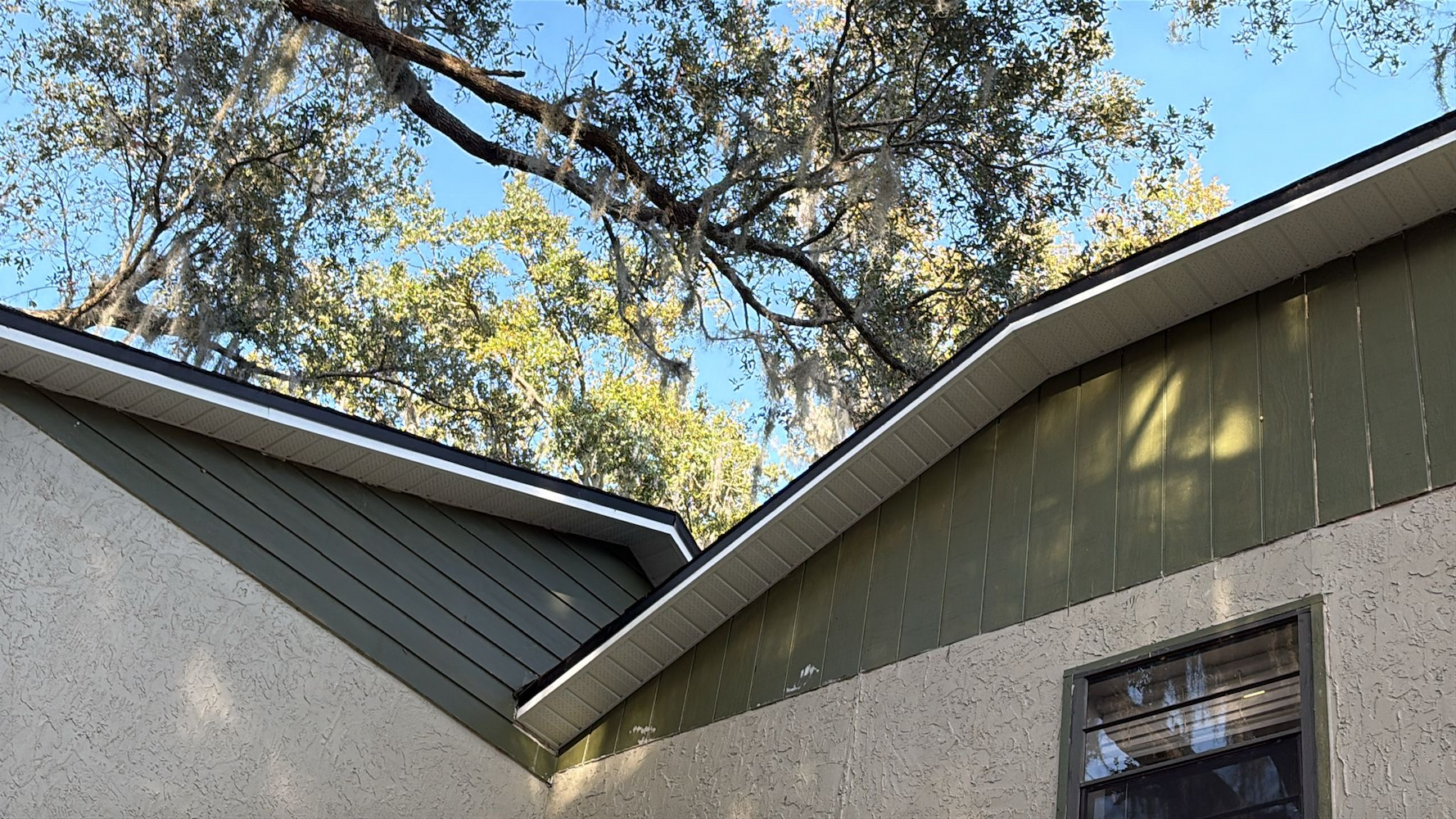
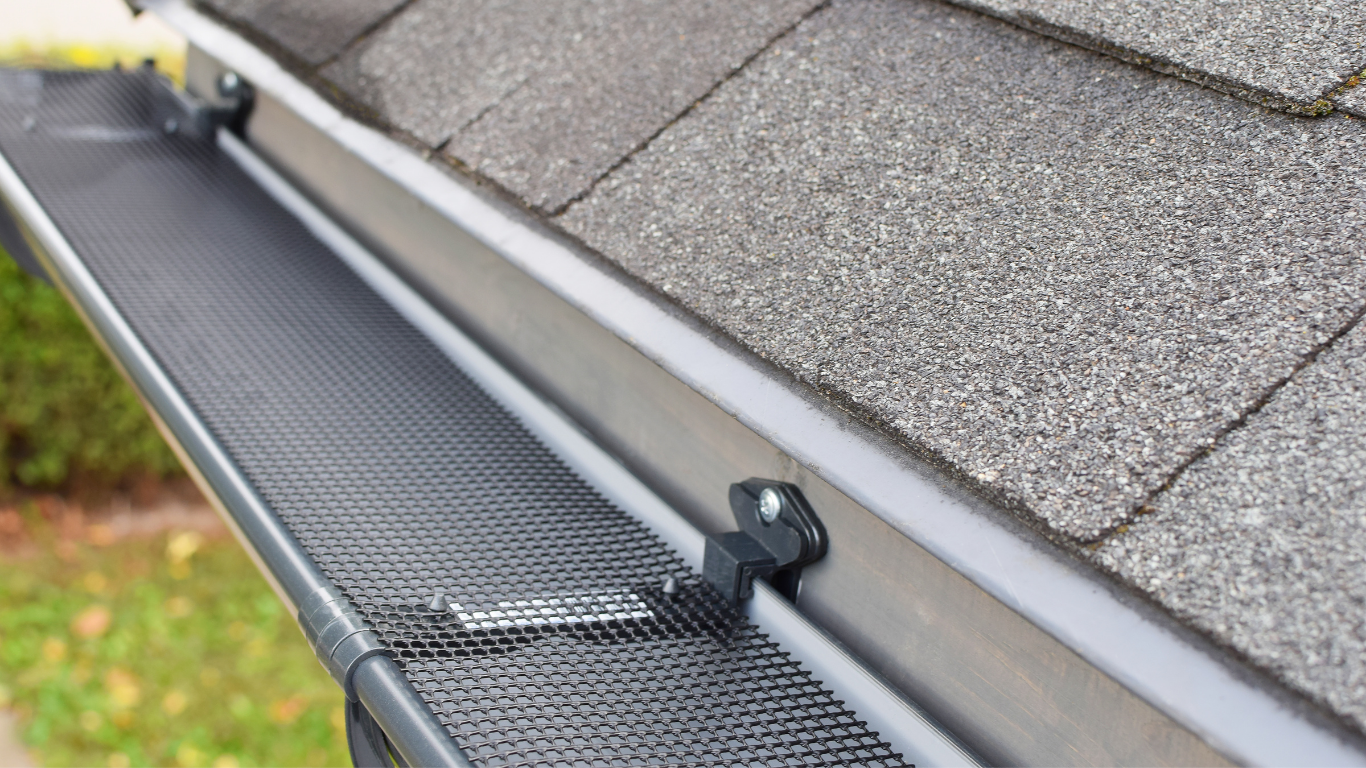
Florida gutters take a beating from sudden downpours, wind-driven rain, and debris that ranges from oak leaves to pine needles and roof grit. The right gutter guard can reduce clogged gutters and overflow, but only if it matches your roof, rainfall volume, and the way your system drains.
Key Takeaways for Florida Homeowners
- Best all-around choice for most homes: Micro-mesh guards, professionally installed with correct gutter pitch and proper valley handling.
- Best budget option: Quality metal screen guards, especially when debris is mostly leaves (expect more upkeep).
- Heavy rain performance is about the system, not just the guard: Pitch, downspout capacity, and roof valleys are the usual reasons for overflow.
- Do not install guards over failing gutters: Sagging runs, separated seams, and fascia rot should be repaired or replaced first.
- Your quote should include valley handling and drainage checks: If those are not addressed, even premium guards can fail in Florida storms.
What Is the Best Type of Gutter Guard for Florida Weather?
Why Micro-Mesh Tends to Win in Florida
Fine debris is the real clog-maker. Leaves are obvious, but the sludge that creates chronic clogs often comes from grit and small organic debris.
Better long-term performance. Micro-mesh typically reduces the frequency of internal cleanouts compared to larger-opening guards. Learn more about how long gutters last with proper maintenance.
Works well across common rooflines. With the right edge fit and installation method, it performs well on many Florida homes.
When a Different Option Can Make More Sense
Lots of big leaves, minimal fine debris: A metal screen can be a cost-effective solution, especially if you are OK with periodic brushing after storms.
Short-term or rental situations: Foam or brush inserts can reduce immediate clogs, but they usually require more maintenance and have a shorter service life.
High-volume roof valleys: Your best "upgrade" may be valley solutions and drainage improvements (additional downspouts, better flow management) more than a different guard type. Understanding your gutter system anatomy helps identify where improvements are needed.
Gutter Guard Types Compared
| Gutter Guard Type | Best For | Biggest Drawback | Maintenance Level | Typical Lifespan |
|---|---|---|---|---|
| Micro-mesh | Fine debris plus strong overall protection | Debris can build up on top over time; installation quality matters | Low to Medium | ~10-25+ years |
| Screen (metal) | Larger debris (leaves, twigs) at a lower cost | Fine debris can pass through; top can mat during storms | Medium | ~5-15 years |
| Reverse-curve | Shedding larger debris while covering the gutter | Can struggle with roof grit and certain roof edges; performance depends on fit | Low to Medium | ~10-20 years |
| Foam | Quick, low-cost improvement for basic clog reduction | Can trap grit and organic material inside the gutter, increasing sludge | High | ~1-3 years |
| Brush | Easy install, helps with leaves | Debris gets caught in bristles and still needs frequent cleaning | High | ~2-5 years |
Do Gutter Guards Work in Heavy Rain?
Yes, gutter guards can work in heavy Florida rain, but the gutter system has to be able to move water fast. Most "gutter guard failures" in downpours are caused by drainage design or installation issues, not the idea of guards itself.
The Most Common Reasons Guards Overflow in Florida
Incorrect gutter pitch (slope): Water cannot move efficiently toward downspouts, so it backs up and spills over the front edge.
Roof valleys dumping too much water into one spot: Valleys can concentrate a huge volume of water into a short gutter run. If that area is not reinforced or designed for high flow, overflow happens fast.
Undersized, clogged, or poorly placed downspouts: If water cannot exit quickly, the gutter fills faster than it drains.
Debris matting on top of the guard: After storms, wet leaves and grit can form a dam on the surface that blocks intake.
Poor edge fit at the roofline: If the guard is not fitted correctly to the roof edge, water can overshoot the gutter instead of dropping in. A properly installed drip edge helps direct water into the gutter.
What to Look for in a Florida-Ready Installation
- Correct pitch across every run
- Valleys treated as "high-flow zones," not an afterthought
- Downspouts and outlets sized and positioned for real rainfall
- Secure fastening so guards do not shift over time
- A realistic maintenance plan (especially after major storms)
Avoid the dangers of incorrect gutter installation by working with experienced professionals.
How Much Do Gutter Guards Cost in Florida?
Costs vary based on linear footage, stories, roofline complexity, and whether your gutters need repairs before guards can be installed. Florida homes also tend to have pricing swings based on access, valley volume, and storm-driven maintenance needs.
Typical Price Ranges by Guard Type (Per Linear Foot)
Foam and brush: Lower-cost range, often chosen for short-term solutions; usually more maintenance and shorter lifespan.
Metal screen: Lower to mid range, a common value option for larger debris; may need more frequent cleaning in mixed debris areas.
Reverse-curve: Mid to higher range, pricing depends heavily on the system design and roof-edge compatibility.
Micro-mesh: Mid to higher range, often the best performance for fine debris when professionally installed.
Premium full-service systems: Can run higher, especially on two-story homes or complex rooflines with multiple valleys.
What Drives the Final Price Most
- Total linear feet of gutters
- Number of stories and roof access
- Roofline complexity (corners, returns, multiple roof sections)
- Valleys and heavy-flow areas
- Downspout work (adding or resizing downspouts, clearing restrictions)
- Gutter condition (repairs, re-pitching, or replacement needed first)
If you want a quote that holds up in Florida weather, make sure the contractor is pricing the drainage performance (pitch, valleys, downspouts)—not just the guard material. Many homeowners find that seamless gutters paired with quality guards offer the best long-term value.
Signs You Need New Gutters Before Installing Guards
Gutter guards do not fix structural gutter problems. If the gutter system is already failing, guards can hide the symptoms while water continues damaging fascia, soffit, siding, and the foundation area.
Check for These Red Flags First
- Sagging runs or gutters pulling away from the fascia
- Separated seams or dripping at joints
- Overflowing in light rain
- Standing water in the gutter (often a pitch issue)
- Rotting fascia or soft wood behind the gutter line — see signs you need fascia repair
- Peeling paint, staining, or mildew near the roof edge
- Rusting, cracking, or warped sections
- Recurring clogs at the same locations (often tied to valleys, pitch, or downspouts)
If you notice any of these, it is usually smarter to repair or replace problem sections first, then install guards on a system that drains correctly. Learn how to prevent and repair soffit damage before it spreads.
What to Ask in a Gutter Guard Quote
Use this checklist to avoid quotes that sound good but fail during Florida downpours.
Product and Performance
- What type of guard are you installing (micro-mesh, screen, reverse-curve, foam, brush)?
- What debris is it designed to block (fine grit vs leaves)?
- What maintenance is expected, and how often should it be inspected?
Installation Method and Edge Fit
- How is the system fastened and secured for storm conditions?
- How does it integrate with the roof edge and drip edge?
- Will installation affect shingles, tile edges, or roofline components?
Valleys and High-Flow Areas (Do Not Skip This in Florida)
- How will you handle roof valleys that dump high volumes of water?
- Will you add additional intake capacity or targeted solutions where needed?
Downspouts and Drainage
- Are downspouts properly sized and placed for the roof area they drain?
- Will you check for restrictions and confirm water is flowing away from the home?
Warranty and Accountability
- What is covered under materials vs workmanship?
- What is excluded (storm debris, maintenance, clogs)?
- Will you provide a walkthrough and photos of key areas like valleys and outlets?
Frequently Asked Questions
Are gutter guards worth it in Florida?
What gutter guards are best for pine needles?
Do gutter guards eliminate gutter cleaning?
Why do gutter guards overflow in heavy rain?
Can I install gutter guards on older gutters?
Do gutter guards help prevent mosquitoes and pests?
What is the lowest-maintenance gutter guard type?
How long does gutter guard installation usually take?
Get a Gutter Guard Inspection and Quote
If you want gutter guards that hold up in Florida weather, start with an inspection that checks gutter pitch, downspouts, outlets, and roof valleys. That is how you avoid paying for a premium guard on a system that cannot drain fast enough.
GutterWorks Services serves the Greater Orlando and Central Florida area with professional gutter solutions designed for heavy rain.