
Quick Answer
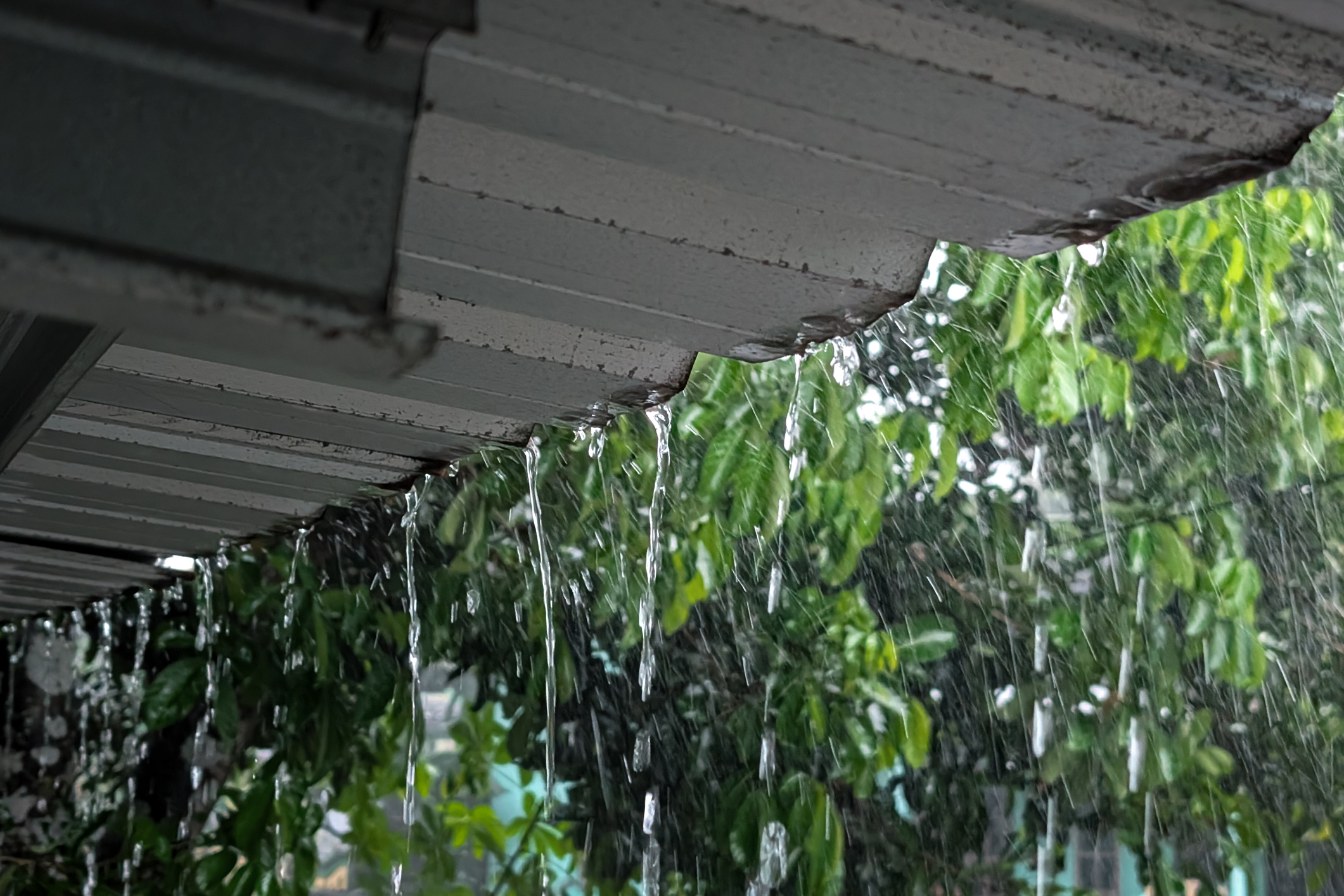
Underground gutter drainage is a buried pipe system that carries roof runoff from your downspouts to a safe discharge point away from your foundation. In Central Florida, it solves the three problems standard downspout extensions cannot: foundation slab erosion, lawn pooling on flat lots, and water sheeting onto pool decks during summer thunderstorms. Most Orlando-area installations use schedule 40 PVC, run at a quarter-inch slope per foot, and terminate at a daylight outlet, dry well, or French drain. Pricing depends on linear footage, soil and root conditions, termination type, and whether the line crosses any hardscape. For a specific number on your home, request a free in-home assessment.
Why Florida Homeowners Need This More Than Anyone Else
Most online guides on underground drainage are written for homes in Ohio or Pennsylvania. Florida is a different problem entirely. Your gutters can be perfectly sized and perfectly clean, and water can still wreck your yard, your slab, and your screen enclosure. The reason is what happens after the water leaves the downspout.
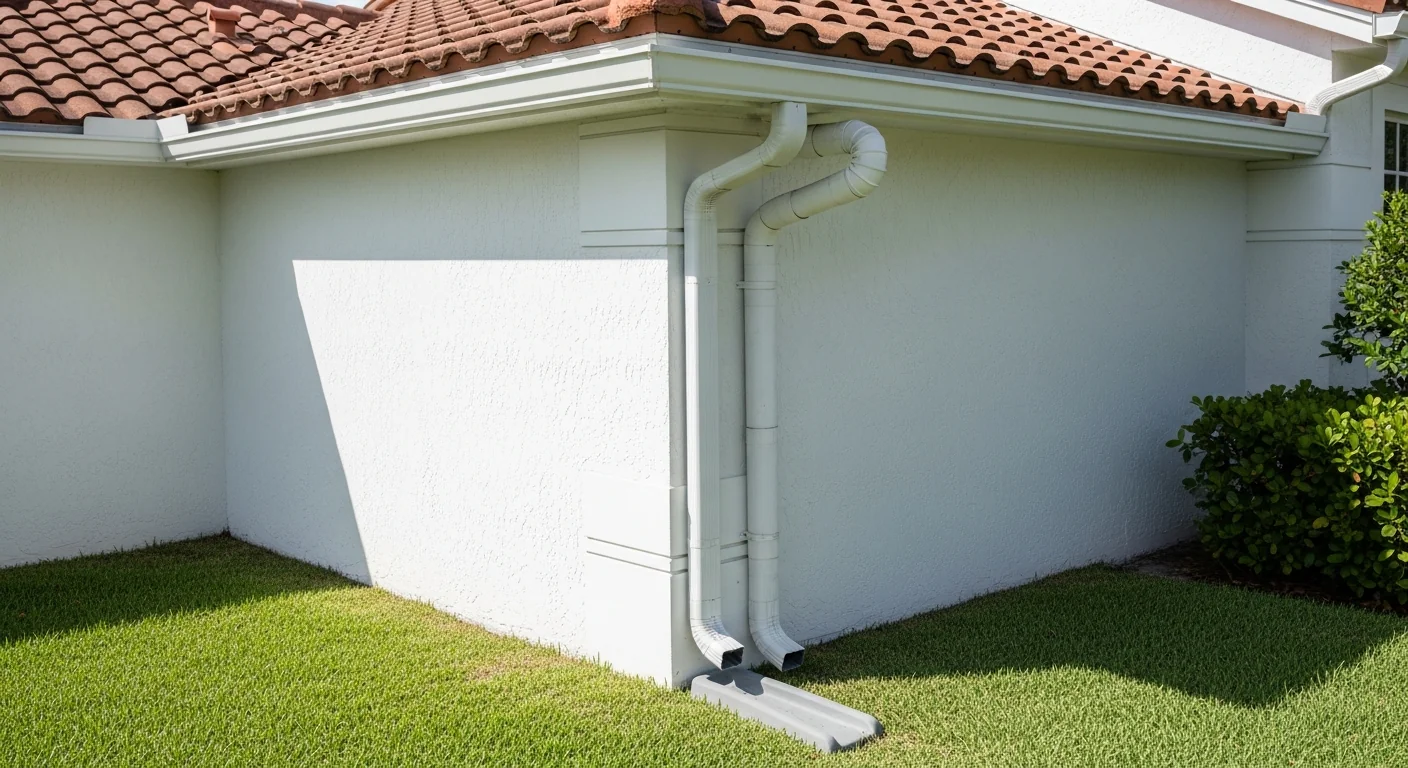
A standard 90-degree elbow and a three-foot splash extension push roof runoff exactly three feet away from your house. On a flat Central Florida lot with sandy topsoil over a clay layer, that water has nowhere to go. It pools, it migrates back toward the foundation, and over the course of a few rainy seasons it washes the bedding sand out from under your slab.
We have replaced gutter systems on homes in Winter Park, Lake Mary, and Clermont where the gutters themselves were fine. The slab was cracking and the irrigation valves were rusted shut because the downspout dumps were ten feet from the screen enclosure footer. A buried drain that ran the runoff out to a daylight outlet at the property line would have saved the slab repair entirely.
That is the gap this guide fills. We are going to walk through what an underground gutter drainage system actually does, the four ways to terminate one in Florida, what materials hold up in our soil and humidity, and what it costs in the Orlando metro. By the end of it you will know whether your home needs one, and what a fair quote looks like.
At GutterWorks we have spent more than 20 years installing gutter and drainage systems across Central Florida. Underground drainage is one of the most common service calls we get from May through October, when afternoon storms expose every flaw in a homeowner’s existing setup.
What Underground Gutter Drainage Actually Is
Underground gutter drainage is a buried pipe system that connects your downspouts to a discharge point located a safe distance away from your foundation. The pipe carries water under your yard, through any landscape beds or hardscape, and out to a place where it can either daylight onto a swale, soak into a dry well, or feed a French drain.
The system has four pieces. The downspout connection at the top, the buried pipe run, any inline catch basins or pop-up emitters, and the termination point. Each of those pieces has trade-offs in Florida that matter more than they do in drier climates. Get the pipe wrong and roots invade in two seasons. Get the slope wrong and you end up with a buried trough of standing water under your lawn. Get the termination wrong and you have moved the puddle from one part of your yard to another.
The reason underground drainage works when surface extensions fail is that it gives water somewhere to go that is not your foundation. On a typical single-story Florida home with 2,000 square feet of roof, a one-hour storm dropping two inches of rain produces about 2,500 gallons of runoff. Splash blocks and short surface extensions cannot relocate that volume. A four-inch buried pipe with proper slope can.
How Poor Drainage Floods Your Pool Deck and Screen Enclosure
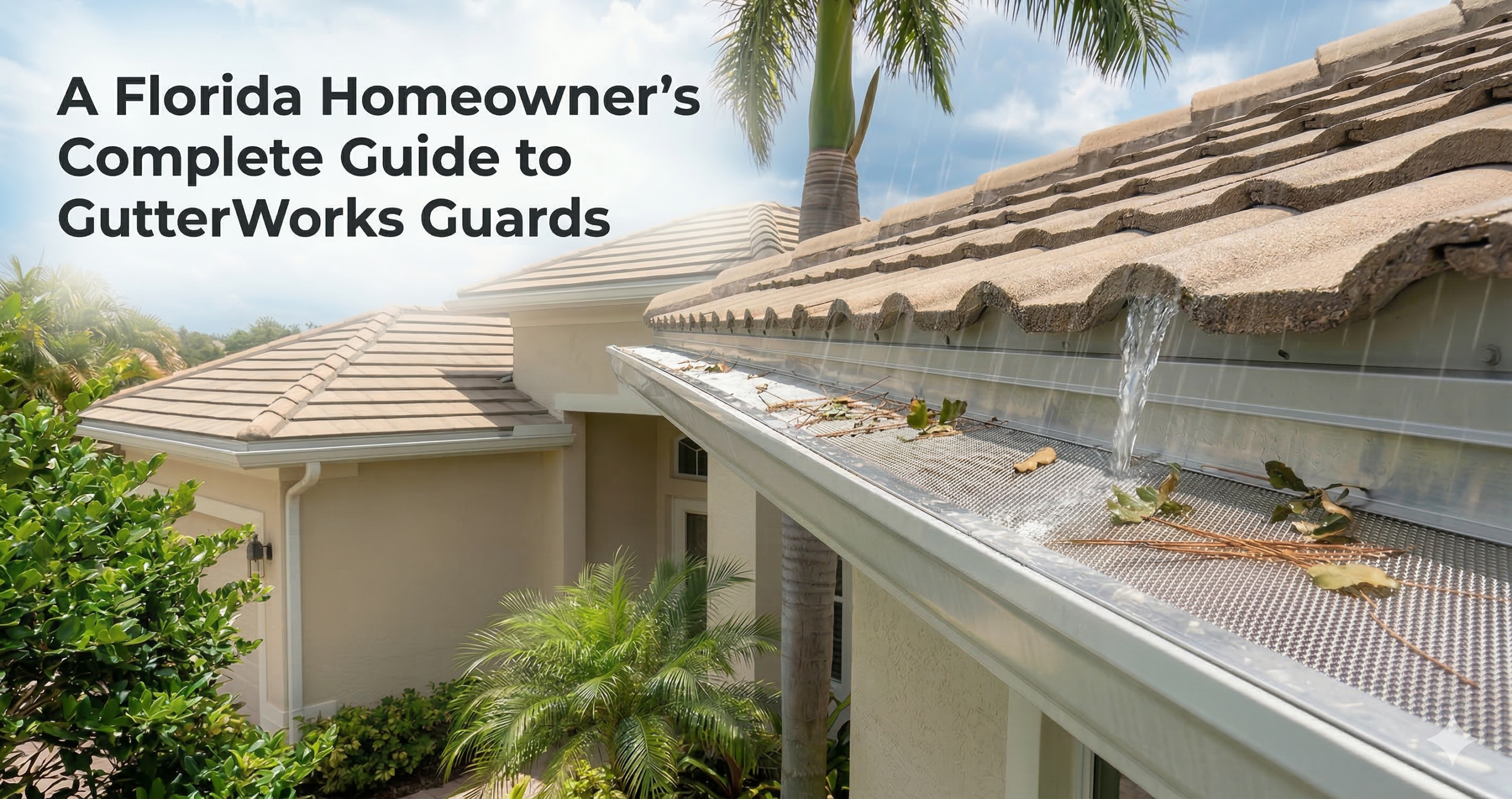
If you have a screen enclosure, this section is where the math gets serious. Most of the worst drainage failures we see in Central Florida start at the corner where the main roof’s super gutter meets the house, dump straight onto the pool deck, and then back up against the screen footer.
A screen enclosure changes the drainage equation in two ways. First, the enclosure adds its own roof area that needs to drain, usually through a super gutter running along the wall connection. Second, the pool deck inside the cage is graded toward a small set of deck drains that were never designed to handle roof overflow on top of normal rainfall. When water from the main house roof sheets onto the pool deck, those deck drains saturate within minutes and water backs up against the screen enclosure footer.
Three things start to fail at that point. The aluminum screen footer corrodes at the base where it meets the concrete. Standing water on the pool deck weakens the bond between the deck coating and the concrete substrate. And the soil immediately outside the enclosure footer washes out, which over time pulls the entire frame slightly out of square and stresses every panel and screen joint.
A buried drain run from the main roof’s downspouts to a discharge point past the enclosure perimeter solves all three problems at once. The runoff bypasses the pool deck entirely. The deck drains only have to handle the rain that falls inside the cage, which is what they were sized for. And the soil around the screen footer stays consistent.
This is the differentiator most general drainage contractors miss. Burying a downspout is a generic landscaping job. Burying a downspout while preserving the function of a screen enclosure and a super gutter is a Florida specialty. We do both because we install both.
The Four Ways to Terminate an Underground Drain in Florida
The pipe has to end somewhere. In Florida, where the water table is shallow and many lots are flat, the termination decision is the most important one in the whole project. Get this wrong and the rest of the system does not matter.
1. Daylight Outlet
A daylight outlet is exactly what it sounds like. The buried pipe runs out from the house at slope and emerges at the surface in a swale, a drainage ditch at the property line, or a low spot where water can move away on its own. This is the cheapest and most reliable termination in Florida when your lot has the grade for it.
When it works: properties with a natural slope away from the house, lots adjacent to a swale or retention area, neighborhoods with public stormwater swales between front yards. Most Orange County subdivisions built before 1995 have these.
When it does not: pancake-flat lots with no grade change in 30 feet, properties where the only slope runs toward a neighbor’s yard (which violates HOA covenants and most municipal drainage ordinances).
2. Dry Well
A dry well is a buried gravel pit, a perforated tank, or a manufactured plastic chamber that collects water and lets it slowly soak into the surrounding soil. In sandy Central Florida soil, a properly sized dry well can absorb a surprising amount of water before backing up.
When it works: sandy or sandy-loam soil profiles, lots with no daylight outlet option, situations where the runoff volume is moderate and storms are spaced out. Most lots in Lake Nona, Hunters Creek, and Avalon Park fit this profile.
When it does not: clay layers within four feet of the surface, lots where the seasonal high water table is within two feet of the bottom of the proposed well. Both conditions are common in parts of Geneva, Chuluota, and the older parts of DeLand.
3. French Drain
A French drain is a perforated pipe in a gravel-filled trench. Used as a termination, it is a long, narrow version of a dry well that disperses water along its entire length instead of in a single spot. We often combine a French drain termination with the buried gutter line itself, especially when the homeowner also has a yard drainage problem at the same end of the property.
When it works: yards with persistent wet spots that the homeowner wants solved at the same time, properties where a single dry-well location would not have enough soak capacity, hardscape installations where the French drain doubles as a perimeter drain for a paver patio.
When it does not: high-clay soil that cannot accept the dispersed flow, narrow side yards with no room for the trench length needed.
4. Storm Drain Tie-In
In some neighborhoods you can legally connect a buried gutter line to the municipal storm drain system. This is the Cadillac termination. Water leaves the property entirely.
When it works: properties with an existing curb stub, neighborhoods where the stormwater code permits private connections, mostly newer master-planned communities in Osceola and parts of Orange County.
When it does not: most older Central Florida neighborhoods, properties on private septic where the storm and sanitary systems are completely separate, and any case where the HOA prohibits new utility connections without architectural review. Always pull a permit and confirm with your city before going this route.
Materials: Why We Only Use Schedule 40 PVC in Florida
Two pipe materials dominate the underground drainage market: solid schedule 40 PVC and corrugated black plastic (the kind you can buy in 100-foot rolls at Home Depot). The internet is full of arguments about which is better. In Florida the answer is settled.
We use schedule 40 PVC on every install. Here is why corrugated fails in our climate.
Florida tree root systems are aggressive year-round because the growing season never stops. Live oak and ficus roots find the seams and ribs of corrugated pipe and pry them open. Within five to seven years, a corrugated pipe in a Central Florida yard is partially or fully crushed by root pressure. Schedule 40 PVC is rigid enough to resist that pressure for 40 years or more.
Corrugated pipe also collects sediment in every rib. Roof grit, oak pollen, and the fine sand that washes off bare lawn beds all accumulate in the corrugations and slow the flow. After two or three storms, water moves through corrugated pipe at a fraction of the rate it moves through smooth-bore PVC. In a climate where a single afternoon storm can dump two to four inches in an hour, that flow loss matters.
The cost difference is real but smaller than people assume. Material runs more for PVC, but the total install cost on a typical run is only modestly higher because most of the labor is digging the trench. For a project that should last 30 to 40 years, PVC is the right call every time.
Slope, Depth, and Layout: The Specs That Actually Matter
A buried drain only works if water moves through it under gravity. Get these three numbers right and the system runs maintenance-free for decades. Get them wrong and you create a buried problem.
Slope. The pipe needs to fall at least one-quarter inch per linear foot from the downspout connection to the termination. On long runs we target three-eighths inch per foot to give a margin against settling. A 60-foot run at quarter-inch slope drops 15 inches from start to finish. That has to be designed into the layout before any digging starts.
Depth. In Florida the trench needs to be deep enough that mowers, irrigation trenchers, and frost (which is not a real concern here, but tree feeder roots are) do not reach the pipe. We target a top-of-pipe depth of 10 to 14 inches for most yards. Where the line crosses landscape beds with shrubs, we go deeper. Where it crosses a future hardscape, we use a sleeve.
Layout. Straight runs whenever possible. Sweeping 45-degree bends where direction changes are unavoidable. We avoid 90-degree elbows in the underground portion because they create turbulence and a clog point. If a 90 cannot be avoided, we use a sweep 90, not a hard 90, and we install a cleanout at that location.
Two real-world examples. A 45-foot run from a single downspout in a Winter Springs yard to a daylight outlet at the property swale will use about 50 feet of four-inch schedule 40 PVC, two sweep 45s, one cleanout, and a pop-up emitter at the daylight end. The trench takes most of a day. A 110-foot run across a sloped Mount Dora lot tying into a French drain along the rear lot line will use six-inch pipe at the discharge end, two cleanouts, and a transition from four-inch to six-inch. That one takes most of two days.
What an Underground Drainage System Costs in Central Florida
Underground drainage is priced per project rather than per linear foot, because the variables that drive cost are the layout, the termination type, the soil and root conditions, and whether the line crosses any hardscape. We do not publish flat ranges because two homes on the same street can quote very differently.
The biggest cost factors on a typical Central Florida residential project:
- Linear footage from the downspout to the termination point. Longer runs need more pipe, more trench, and more time.
- Termination type. A daylight outlet on a sloped lot is the cheapest. A dry well, French drain, or storm-drain tie-in adds material and labor.
- Soil and root conditions. Sandy loam digs fast. Clay layers and live-oak root systems add hours to a trench.
- Hardscape crossings. Cutting and patching a paver patio, concrete driveway, or pool deck adds material and finish work.
- Combined with new gutters. If you are already replacing your gutters, doing the buried drainage on the same site visit saves on mobilization and is the most efficient way to do both.
For a free Orlando-area assessment with a real quote, contact us for a no-obligation estimate and we will walk the property with you.
DIY or Hire a Pro: An Honest Decision Aid
We get asked this a lot. A homeowner who can swing a shovel and run a tape measure can in theory install a single short run to a daylight outlet. The honest answer is that most Florida installs need a pro, and the reasons are specific to our region.
Reasons to hire a pro in Central Florida. HOA approval and architectural review boards in master-planned communities like Lake Nona, Hunters Creek, Avalon Park, and most of Lake Mary require licensed contractor sign-off before any subsurface work. Slope tolerance on flat lots is unforgiving and the difference between a quarter-inch and a sixteenth-inch per foot is the difference between a working system and a buried trough. Irrigation systems crisscross most Florida yards and one severed mainline turns a straightforward project into a much larger repair plus a flooded lawn. Tree roots from the live oak in your front yard or the slash pine in your neighbor’s are a known unknown until the trench is open. And termination compliance with municipal and county stormwater rules varies by jurisdiction across Orange, Seminole, Volusia, Lake, and Osceola counties.
Cases where DIY works. A short run, 25 feet or less, on a clearly sloped lot with no irrigation in the path, no HOA approval requirement, no hardscape to cross, and a clean daylight outlet at the end. Bag of gravel, schedule 40 PVC, a sweep 45, and a pop-up emitter from the home center will get the job done.
Where homeowners get into trouble. Underestimating slope. Using corrugated pipe because it is cheaper. Running the line under a future patio without a sleeve. Tying into the irrigation drain by mistake (this is more common than you would think). And terminating onto a neighbor’s property, which is a code violation in every Central Florida jurisdiction.
If your project is anything more than a single short run, get a few quotes. The cost of a pro install is almost always less than the cost of fixing a DIY install that did not work.
Maintenance: How to Keep a Buried Drain Working for 30 Years
A schedule 40 PVC system installed correctly should run for three decades with minimal intervention. The maintenance items that matter are simple and infrequent.
Annual cleanout flush. Once a year, ideally before the start of the rainy season in late May, run a garden hose down the cleanout for ten minutes. If water comes out clean and at full flow at the daylight end, the system is fine. If the water backs up at the cleanout, it is time for a more involved inspection.
Pop-up emitter check. Pop-up emitters at daylight outlets are simple devices that lift open under water pressure and close again when flow stops. They keep small animals and debris out. Once a year, lift the cap and look inside for nests or sediment.
Catch basin clean. If your system has a catch basin at any of the downspout connections (we install one on most projects with screen enclosures), pull the grate twice a year and remove the leaves and grit that have collected.
Root inspection. Every five to seven years, run a sewer camera through the line. Most plumbing contractors offer this as an inexpensive service. It catches root intrusion before it crushes the pipe. Schedule this immediately if you have a live oak or ficus within 20 feet of the line.
What not to do. Do not run a power auger or a sewer snake through a buried gutter drain unless a pro has identified a specific blockage. Pop-up emitters, sweep fittings, and dry-well chambers can all be damaged by an aggressive cleaning tool.
Signs Your Home Needs Underground Drainage
You do not need a buried drain on every Florida home. Some properties are graded well enough that splash extensions and surface routing are fine. Others have chronic problems that no amount of surface drainage will solve. Here is how to tell which one you have.
The simplest field test we use on initial site visits we call the 3-Minute Storm Test. The next time it rains hard, put on a poncho and walk the perimeter of your home with your phone camera. Stand at each downspout for 30 seconds. Then walk to the points that are 5, 10, and 15 feet downhill from each downspout. If you see any of the following, your home is a candidate.
- Standing water within 10 feet of the foundation that does not drain in under 15 minutes
- Mulch, sod, or topsoil washed out and piled against an edge or hardscape
- Water pooling on a pool deck inside a screen enclosure during the storm
- Erosion channels in the lawn that point back toward a downspout
- Water visibly running across a paver patio or driveway from the downspout direction
- Dampness or efflorescence on the lower exterior wall under a downspout
Two or more of these means you have a real drainage problem and a buried system will pay for itself in avoided foundation, slab, or enclosure repairs. One of these is borderline. Zero of these and your existing surface drainage is doing its job.
You can read more about why poor drainage is the silent killer behind so many gutter problems in our gutter system anatomy guide and our breakdown of what clogged gutters do to a Florida home.
Frequently Asked Questions
Get a Free Drainage Assessment
If your downspouts are dumping water on your foundation, your pool deck, or your neighbor’s property line, you do not need to live with it. We have spent more than 20 years installing gutter and drainage systems across Orlando, Oviedo, Clermont, DeLand, Davenport, Kissimmee, Sanford, Winter Park, Winter Garden, Lake Mary, Lake Nona, and the rest of Central Florida. We will walk your property, run the 3-Minute Storm Test with you, and give you a fair quote with no pressure.
Request your free in-home drainage assessment or call us directly. No-obligation, no surprises.


Leave A Comment
You must be logged in to post a comment.